
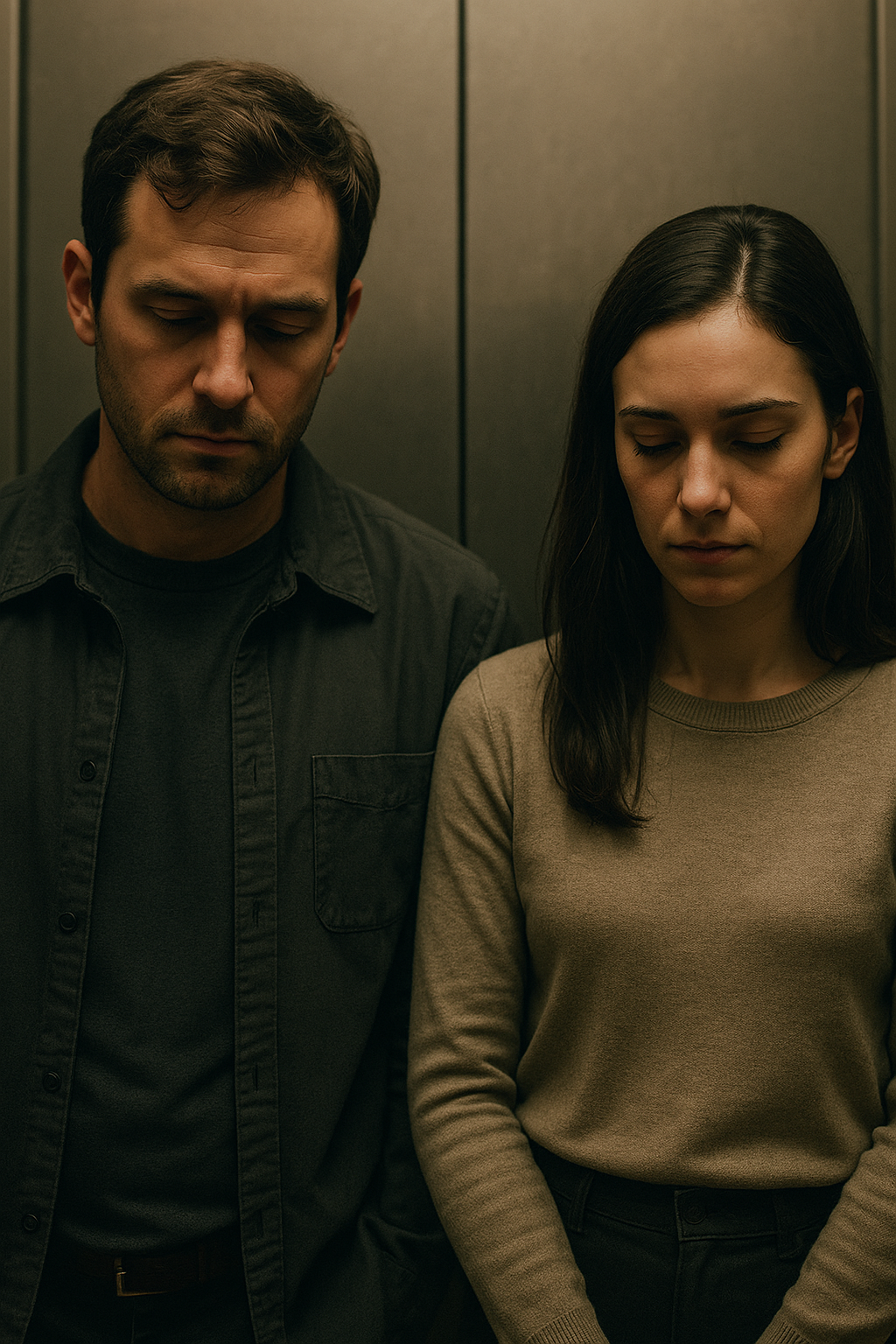
There’s a peculiar kind of silence that lives between strangers in an elevator. Not the calm kind that carries peace, but something heavier, a silence pregnant with unvoiced questions and invisible tension. And even though no one says a word, that silence can be felt like a weight pressing on your chest. Why does this small, confined space wrap us in such a delicate, uneasy hush?
The Invisible Contract of Shared Space
When you step into an elevator with a handful of strangers, you enter a peculiar social contract. It’s a temporary club with unspoken rules: stand facing forward, avoid eye contact, don’t initiate conversation unless necessary. The elevator is a space owned by no one, but claimed collectively for the few seconds it carries you.
This agreement to keep quiet is less about rudeness and more about managing vulnerability. Suddenly, you are close to otherstoo close, according to our usual social normsbut still strangers with no shared context or history. That proximity without connection stirs a quiet anxiety.
Your silence in that moment isn’t empty. It’s charged with all the questions your body and mind can’t put into words. Am I safe here? Will this moment pass without incident? Are you as eager as I am for the doors to open?
The Pressure to Fill a Space Nobody Owns
Elevators hover in an odd in-between state. You are neither here nor there, stuck between floors, motionless yet in transit. It’s a shared liminal zone and, because no one “owns” this moment, there is a heightened sense of responsibility to manage it all by yourself.
This pressure breeds the urge to fill the silence, to break the tension before it grows uncomfortable. But what if that silence isn’t something to be conquered? What if acknowledging the quiet could open up something deepera tacit understanding of shared humanity?
Instead, the silence challenges us. It doesn’t ask for conversation; it demands presence. It invites you to recognize the invisible lives around you, even if only for a few breaths. The quiet can be a mirror reflecting our need to connect, or just our fear of exposure in these fleeting encounters.
Breathing Through the Unspoken
Inside that chamber of glass and metal, silence becomes an emotional test. It is a subtle game of endurance. Every inhale and exhale is a surrender, a concession to the unspoken expectations swirling in the air.
At times, you feel like you’re holding your breath, waiting for the elevatoralong with the ambiguous tensionto release you. Other moments, your breath is the only proof of life in a room where words have surrendered.
Silence here is not absence but a presence, loud in its quiet insistence. It is an echo of the myriad anxieties and curiosities that live under social surfacesquestions about safety, belonging, even identity. The elevator does not discriminate, yet it magnifies these feelings because of the transient connection with strangers.
What Elevator Silence Reveals About Us
This shared silence shines a spotlight on the paradox of our social nature. Humans are wired to seek connection and yet fear exposure. We crave interaction but dread vulnerability. The elevator encapsulates this tension in a tiny snapshot of time.
In these brief shared spaces, we see how social norms shape behavior, sometimes suppressing genuine interaction in favor of predictable scripts. We perform social safety by muting conversation, avoiding eye contact, and retreating behind polite silence.
But it also reveals the strength in quiet presence. How we tolerate silence can hint at our comfort with uncertainty, our trust in the ephemeral bonds of strangers, or our unease with unpredictability.
When the elevator doors finally slide open, the relief is visceral. It is an escape not just from the confined space, but from the pressure of invisible emotional negotiations. The silence breaks, and with it the unspoken expectations dissolve.
Finding Humanity in the Moments Between Words
Elevator silence invites us to reflect on the spaces between interaction and solitude, between connection and distance. It reminds us that sometimes what goes unsaid carries more meaning than speech.
There is a quiet courage in enduring that pause. An unacknowledged kindness in sharing the moment without imposing. And inside that brief chamber, where personal boundaries converge, we are suddenly visible to one another in a way we often resist.
Maybe these spaces offer a chance to hold the discomfort, to let silence speak in its own subtle languagewithout fear, without rush. To be present, simply present, becomes its own form of connection.
In the end, elevator silence is less about strangers avoiding each other and more about the fragile negotiation of humanity we all perform every day: the dance between being seen and being unseen, spoken to and left alone. And in that, perhaps, there is something profoundly real.
This article is intended for reflection and entertainment purposes only.