
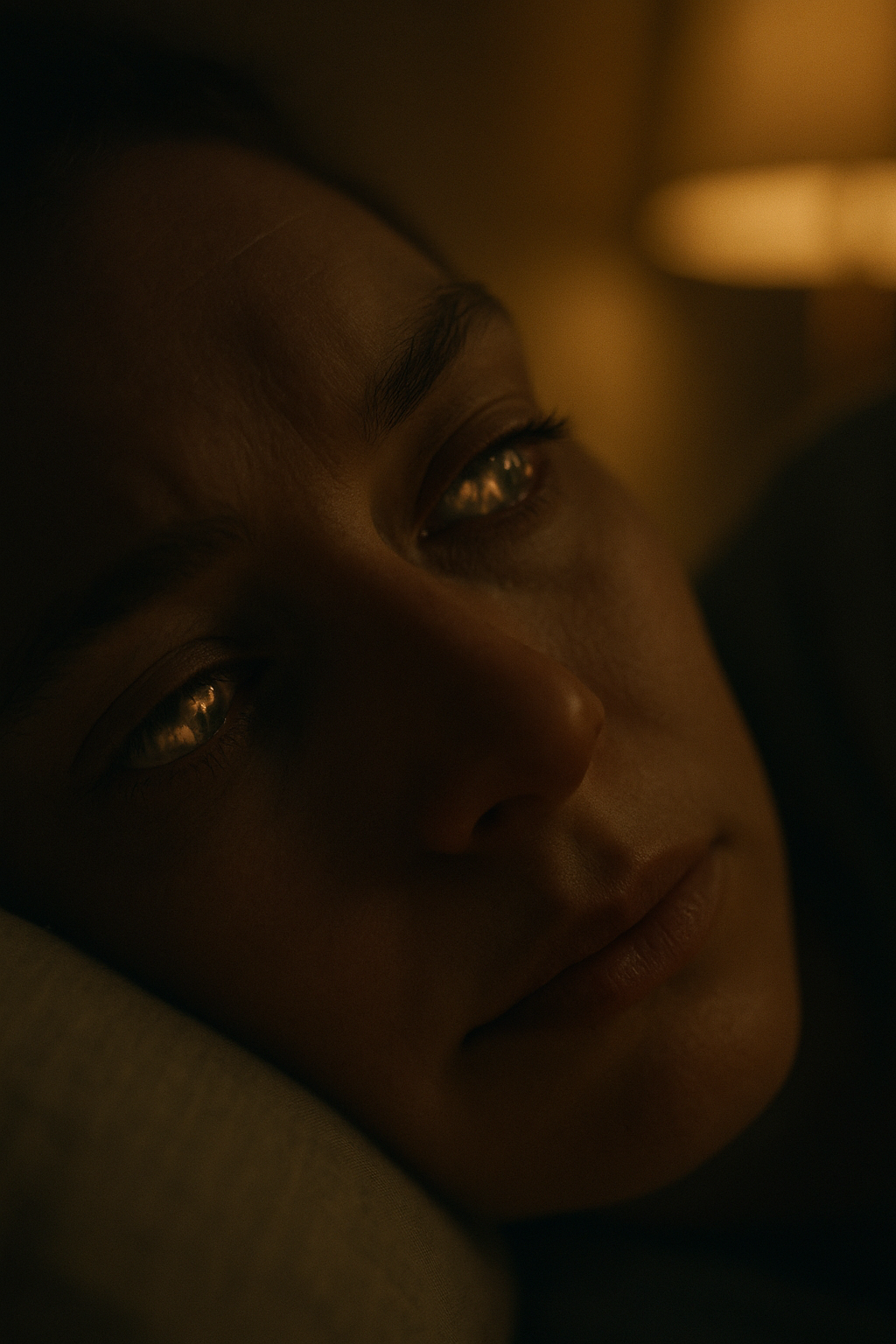
There’s a peculiar alchemy to nighttime. When the noise of the world softens and the day’s distractions fall away, the past seems to draw nearer. Memories we might otherwise dismiss tiptoe back into our minds, colored by a softness that daylight seldom offers. Suddenly, nostalgia doesn’t just visitit feels like shelter.
At night, our minds find a different way to move through time. The sharp edges of some memories dull. The tense uncertainty of now, so heavy during the day, recedes just enough to allow the past to come alive in a way that feels safe, sometimes even comforting. But this nostalgia isn’t about chasing comfort in the simplest sense. It’s a more profound, intricate rehearsal of safety. A mind learning to imagine refuge in a world that often refuses to guarantee it.
The Quiet Space Where Memory Reshapes
Nostalgia is often misunderstood as sentimental daydreaming or a longing for simpler times. But really, it’s a deeply human response to how we process uncertainty and vulnerability. When night arrives, the external chaos quiets and our internal world becomes louder by contrast. That silence invites the imagination to roam freelyoften circling back to moments that once gave us a kind of security.
It isn’t that the past was perfect. Rarely is it. But at night, the mind doesn’t replay memories like a fixed record. Instead, it softens them, nudging the narrative in ways that let us remember not just what happened but what felt safe or possible then. This genetic editing isn’t a lie; it’s a survival tactic. It’s the mind’s way of testing the boundaries between danger and safety. When outside threats retreat, we turn inward and pull from our internal archive those fragments that once served as lifelines.
In cinematic terms, the night rewrites our memories with a different scriptone where the ghosts in our rooms wear faces we can tolerate, even embrace. It’s a subtle exchange: the external quiet allows the mind’s tremors to surface, but it also steadies them by reframing past moments as shelters, not prisons.
Why Nostalgia Softens Fear at Night
There is a paradox in human emotion that often gets overlooked. We want safety, yet we can only experience and appreciate it in relation to its oppositeuncertainty. The night, with its shadows and silence, magnifies uncertainty. It is a time when the boundaries between reality and imagination blur. This blurring invites the past to fill the gaps, offering memories as soft cushions against the unknown.
Nostalgia, in this way, serves as a mental rehearsal. When the world is quiet, the mind takes these softened memories to practice feeling secure, practicing the emotional muscle of safety. This is not denial. It is a quiet form of couragethe courage to keep showing up to a reality that doesn’t guarantee protection.
The odd comfort nostalgia provides is not rooted in fantasy but in resilience. It reminds us that security did exist, even if briefly, even if only in small doses. And in remembering this, the mind designs a psychological shelter. Not a perfect fortress, but a breath where tension eases. A pause where one can gather strength to face dawn again.
The Daybreak Return to Reality’s Sharp Edges
Morning light pulls our brain back into hard focus. The softened shadows of memory begin to sharpen once more. That nostalgic refuge no longer feels quite as safe. The edges of the past harden. The ghosts we invited at night start to feel more like they did in daylightcomplex, unresolved, sometimes threatening.
This transition is a reminder that nostalgia is a fragile gift. It does not erase pain or erase uncertainty. It simply grants a temporary reprieve, a flicker of peace in a world that never promised permanence or certainty.
Understanding this ebb and flow can change how we relate to memory and emotion. Nostalgia is less about longing for a lost ideal and more about a continuous dialogue between our present vulnerability and a past that holds fragments of solace. It reminds us how deeply human it is to seek safetyeven if only fleetingamid an ever-shifting landscape.
Holding Nostalgia with Open Eyes
To allow nostalgia its nighttime role is to hold space for a part of ourselves that the day often crowds out. It’s a space where our emotional truth feels safer to surface, where we don’t have to armor ourselves in the same way. But it also calls us to greet morning with grounded curiosity, aware that the same past that soothes us can also stir shadows.
This interplay invites a gentle form of emotional intelligenceone that embraces both the refuge in memory and the courage to face uncertainty anew. Like watching a well-crafted film, we witness our internal stories unfolding with nuance, recognizing that the quiet power of nostalgia is not a retreat but a rehearsal. It shapes how we show up again and again in a world that rarely stops moving or promising safety.
Acknowledging the night’s gift does not ask us to live in the past but to understand its role in keeping us humancomplex, vulnerable, yet quietly resilient.
This article is intended for reflection and entertainment purposes only.