
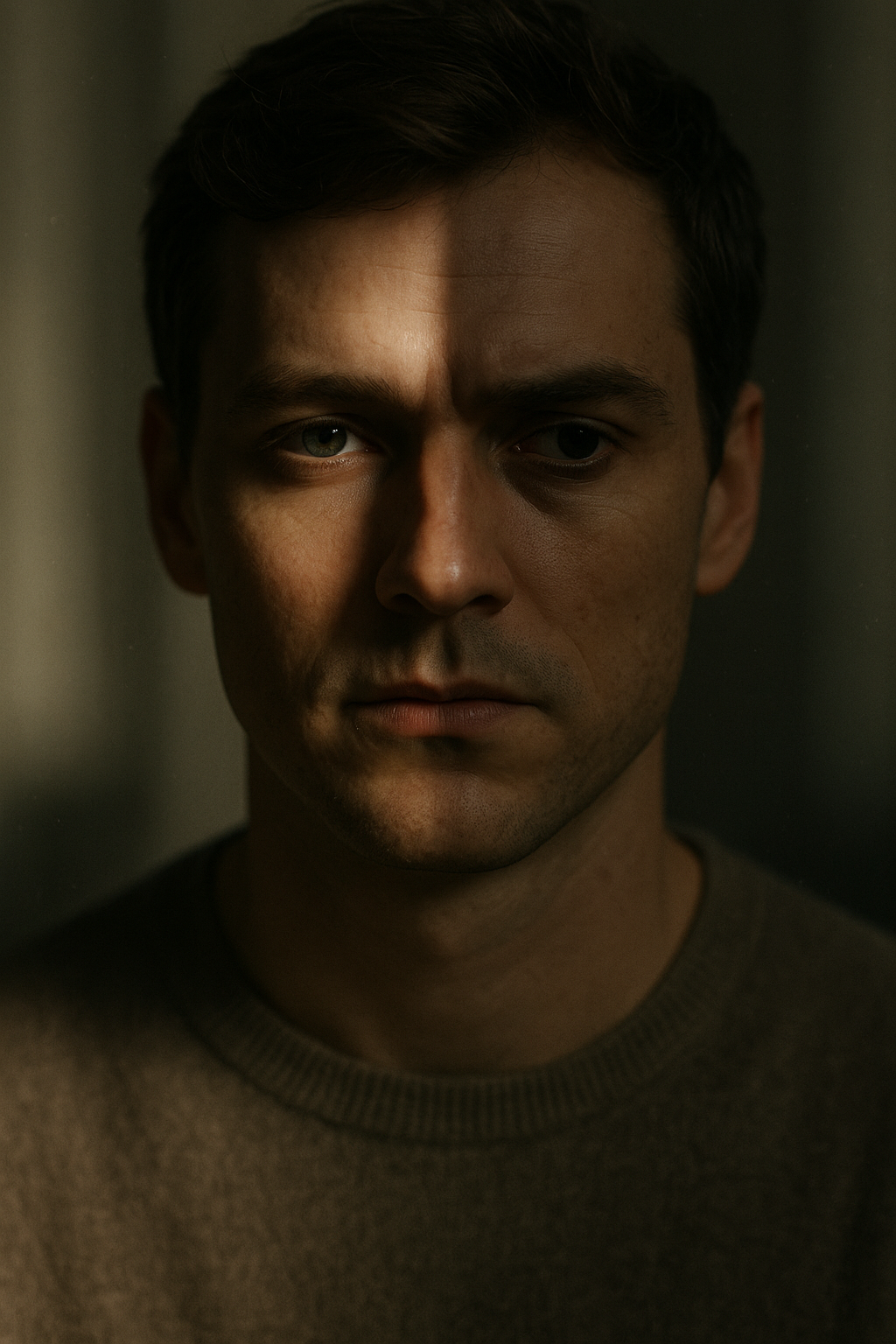
You have probably felt it without naming it. The way a person’s face changes when light shifts. A conversation held in one room feels open and unguarded, but in another, shadows seem to thicken the air with doubt. There is a strange, subtle power in lighthow it carves the features we see, and how it quietly influences the stories our minds begin to tell about the people in front of us.
The Face as a Landscape of Truth
Our faces are the most intimate maps we reveal to others. The soft rise and fall of cheeks, the openness of eyes, the curve of lipsthese details are the terrain on which trust is built or broken. When light falls evenly across a face, those contours are clear, defined, honest. The eyes look open and the lines of expression soften into something approachable.
But the moment light dims or stutters, shadows stretch across that familiarity and something changes inside us. A subtle cue, almost imperceptible, alerts the brain that something might be hidden in the crevices of darkness. It invites questions and pries open a door to doubt. Our instinctual minds, wired over millennia to read faces as signals for safety or threat, start searching for secrets in those shadows.
This is not a logical calculation but a reflex shaped by countless generations where survival depended on quick, often unconscious judgments. The soft edges of light suggest safety, honesty, and warmth. The fractured or low light can make a face seem inscrutable, murky, harder to read. That experience is visceral, immediate, and about more than just the facts presented.
The Mind’s Search for Hidden Truths
Our perception is never a passive lens. It is an active process shaped by biology and braking cognition. When lighting plays tricks on what our eyes can discern, the brain doesn’t just wait quietly. It assembles fragments of data, makes guesses, fills in blanks where vision fails.
In bright, balanced light, the brain agrees with the visual story it receives. The whiteness of teeth, the fullness of a smile, the eye’s sparklethey all broadcast sincerity effortlessly. But under dim or uneven lighting, the brain detects uncertainty as a red flag. It is less about mistrust of the person, and more about an evolutionary warning system that when things aren’t fully visible, hidden dangers might lurk.
This phenomenon extends beyond personal interactions. Think about nighttime driving or walking through a dimly lit street. Shadows in the periphery heighten vigilance, prompt us to slow down, look closer. This ingrained wariness easily carries into how we interpret other humans when their features are obscured by darkness or uneven light.
The Biology Behind Seeing Truth
The physiology of our eyes and the wiring of our brain play a subtle but impactful role here. Rod cells in the eye are specialized to detect changes in low light, enhancing motion and shapes but at the cost of detail and color accuracy. When the scene is poorly lit, the brain relies more on these signals combined with memory and emotional context rather than clear visual input.
Our visual cortex, the part of the brain responsible for processing imagery, integrates this limited and sometimes patchy input with patterns it has learned over yearspatterns shaped by past experiences, cultural narratives, and biological drives. How light hits a face can emphasize a wrinkle or crease, shift a smile into a smirk, or cloak an eye with shadow that might look like a flicker of evasiveness.
This intimate dance of biology and perception reveals why honesty, a concept so tied to social exchange, can feel illuminated or obscured by something as seemingly simple as lighting. It isn’t just physics or coincidence. It echoes deeply rooted survival instincts behind the act of seeing and being seen.
Light’s Role in Our Daily Emotional Landscape
Beyond survival, light influences how vulnerable we feel in conversations, how safe we allow ourselves to be. Under warm, even lighting, people tend to unwind, to open up. The brain relaxes its grip on suspicion. When shadows edge a face, we become more guarded, more alert. The atmosphere thickens.
For those who notice these subtle shifts, these are moments of heightened intuitionwhere gut feelings and sensory details connect. In the quiet language of light and shadow, honesty doesn’t necessarily have to be spoken aloud. It is shown, revealed, or withheld by how illumination plays across skin and eyes.
In aging, this interplay carries another nuance. As skin changes texture and expression lines deepen, light sculpts new truths on the face’s canvas. Sometimes harsh light can feel unforgiving, other times it reveals a lifetime’s stories with clarity and grace. It’s a reminder that we are always seen through a changing light, both literally and figuratively.
Reflections on What We See
In our encounters, what we take as “truth” is often shaped by more than words or actions. Light, that most elemental force, silently shifts the narrative. It frames honesty not just as a concept but a sensory experience, a fleeting alignment between what is visible and what is hidden.
Perhaps the honesty we seek is less about uncovering every concealed detail and more about trusting the space where light balances shadowa space where the human face speaks softly through its illuminated truths and its shadows alike.
This conversation between light and perception invites us to be more patient with our quick judgments and more present to the nuances that shape connection. Sometimes, honesty simply needs to be seen in the right light.
This article is intended for educational, reflection, and entertainment purposes only and is not medical advice.