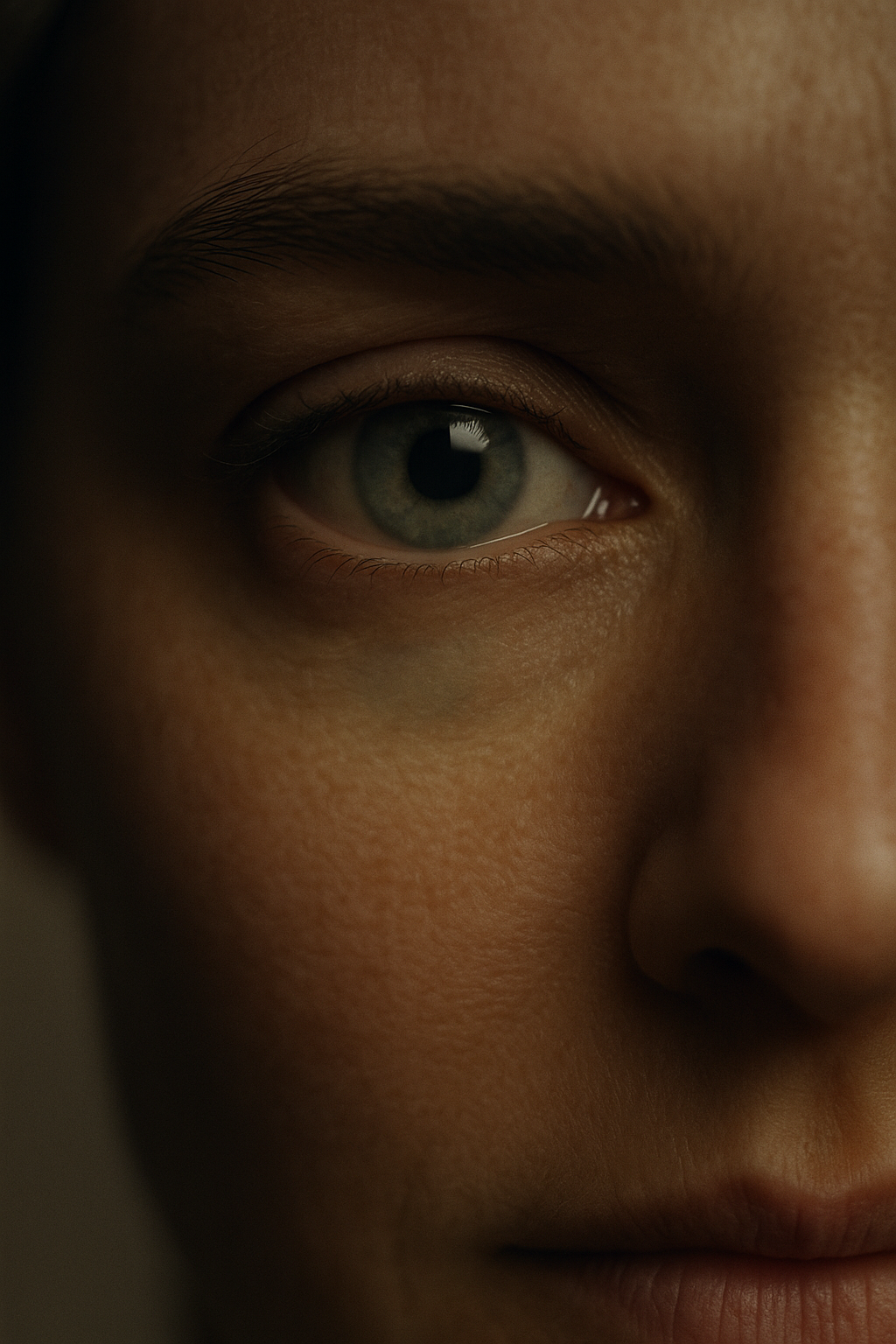
You might think your eyes show you the world exactly as it is. But what you see isn’t always the whole picture. In fact, your brain is constantly taking shortcuts, filling in blank spaces your eyes leave behind. It turns raw, incomplete data into what feels like a smooth, continuous experience. This clever editing makes the world feel seamless but can also cause you to overlook simple truths hiding in plain sight.
The Invisible Work of Vision
Your eyes have a blind spot where the optic nerve leaves the retina. It’s a patch of space with no photoreceptors, so it can’t send visual information to the brain. You don’t notice this gap because your brain doesn’t want you to. Instead, it fills that empty space with a guess of what should be there based on the surrounding details. The result is a flawless picture with no awkward holes.
This guesswork happens not just in your blind spots but wherever information is unclear or missing. Your brain pieces together fragments to create an image that feels whole and reliable. It’s a feat of biology and neural processing that lets us navigate a complex world with ease.
But there’s a trade-off. This quick fix blurs the line between what’s actually there and what your mind expects to be there. You don’t just fill in gaps in vision. You also fill in gaps in understandingand sometimes, those gaps are truths you’re blind to.
When Perception Meets Social Reality
The same invisible editing applies when you try to read social cues or gauge the mood in a room. Your brain assumes patterns and fills in blanks based on past experience, assumptions, or hopes. For those who feel out of place socially, this can mean missing clear signals or misreading intentions. It’s not about a lack of awareness but a built-in bias in perception.
Imagine watching a conversation unfold but only catching half the words. Your brain supplies the missing pieces to make sense of the exchange. Sometimes it guesses right, sometimes it doesn’t. The guess can smooth over awkwardness or help ease anxiety by creating a familiar narrative. Other times, it can reinforce isolation, making you overlook signs that could shift your perspective.
The Illusion of Perfection and Control
Your brain’s drive for a seamless experience also feeds into a human craving for stability and control. It likes neat stories and tidy scenes. So it edits out contradictions, holes, and irregularities. This creates a kind of perfection that never quite exists in reality.
Think about how memories work. They are not perfect recordings but reconstructions that your brain edits each time you recall an event. What you remember is often less about what happened and more about what makes sense or feels right. This editing feels like an internal kindnessprotecting you from confusion or painbut it also makes you vulnerable to missing what’s actually true.
The Biology Behind the Blur
Our brains evolved in a world where fast, efficient processing was key to survival. There wasn’t time to analyze every detail consciously. Filling in gaps and smoothing over irregularities allowed our ancestors to react quickly, avoid danger, and find safety. It’s a deeply wired mechanism that helps us function, not a flaw.
Yet today, this biological shortcut meets a world bursting with subtle complexities, especially in social interactions. The brain’s penchant for prediction and simplification can lead to blind spots in understanding others and ourselves.
Finding Clarity in the Unseen
Acknowledging that your brain is editing reality doesn’t mean doubting your senses or experiences. It means becoming curious about what might get smoothed over or left in the shadows. It’s an invitation to slow down and question the seamless stories your mind creates, especially in moments of confusion or disconnection.
For those who often feel out of place, this awareness can be quietly powerful. It allows space to notice what might be missingnot just in perception but in connection. It’s less about fixing what your brain hides and more about tuning in to the cracks and blanks where actual truths might dwell.
Seeing Beyond the Edit
Ultimately, living with the knowledge of these mental illusions invites a more compassionate relationship with yourself and others. You are not failing to understand the world; you are doing what all humans domaking sense of an incomplete picture. And sometimes, truth waits not in the flawless scene but in the imperfections and gaps your brain tries so hard to erase.
By embracing the limits of perception, you may find that what feels like blindness is actually a doorway to deeper insight.
This article is intended for educational, reflection, and entertainment purposes only and is not medical advice.