
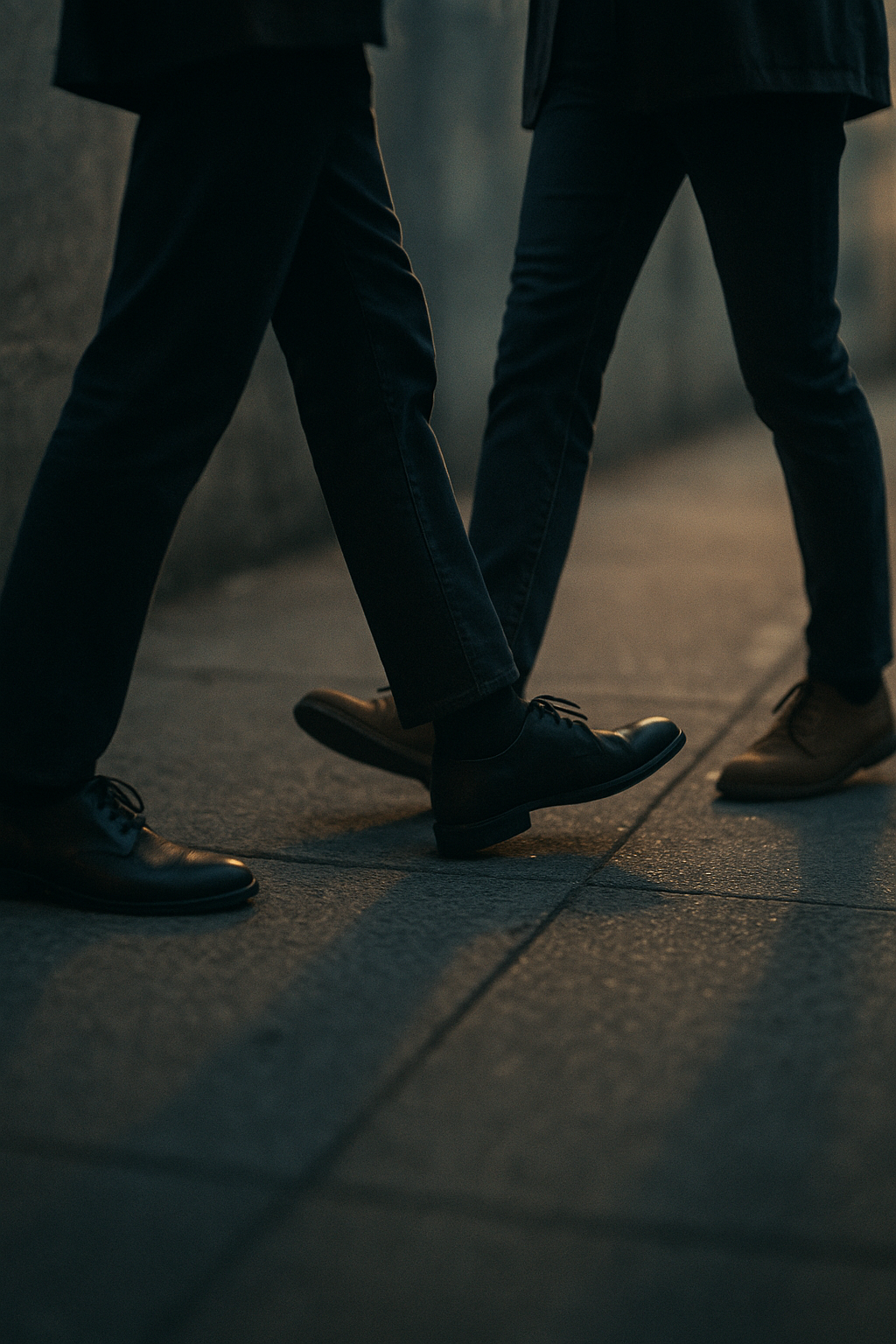
In crowded streets, parks, or quiet cafés, we often notice how strangers feel safer when they are in motion. There’s a subtle shift in how we experience other people when they’re moving, as if movement softens the edges of unfamiliarity and opens just enough space for something human to surface. This delicate dance between distance and closeness, between presence and transience, reveals a hidden rhythm at the heart of how we relate to those we don’t know.
The Fragility of Stillness
When two strangers stand still, a strange kind of tension can settle. Without the flow of movement, the space between them feels like a still pond in freezing coldsilent, heavy, and full of unseen depths. Stillness invites scrutiny. It can plant anxiety as each person becomes a fixed point, observable and, in some ways, trapped.
In motion, however, this dynamic gently dissolves. Movement fractures the moment into something fleeting and unfinished. A glance exchanged while passing is different from a stare held across a silent room. The transient quality of moving bodies sketches a passing connection that doesn’t demand commitment or explanation. Moments slip by before they can become a weight on the chest.
This is not about avoidance, but about the safety found in impermanence. Moving bodies grant permission to remain partly unknown, to veil intentions behind shifting frames. Strangers in motion share a quiet understanding that the encounter is temporary, that no one is caught or pinned down. There is comfort in this evanescence, a silent reassurance that presence here is light, free, and unobtrusive.
Rhythm and the Human Pulse
Movement taps into a primitive human rhythm. Our ancestors were designed to read motion for survivalto detect threat or opportunity in the smallest gestures of the wild. But as society evolved, this instinct transformed. Now, motion doesn’t just signal danger or escape; it offers a language of approach and retreat. It is a pulse we all recognize.
In the simple act of walking past someone, there is a silent choreography of negotiation. We adjust our pace, gaze, and gestures to avoid collision but also to communicate safetyno harm intended, no intent to linger uninvited. This subtle dance creates a shared space of mutual respect without words.
For the observer, for the introverted, this rhythm can feel like a sanctuary. Standing still often means being the focus, the object of observation. Moving, however, means being part of the flow, a node in a larger current that lessens the pressure of observation. The act of passing through rather than pausing invites less emotional exposure and offers a buffer against fear of being seen too closely or judged too harshly.
Intimacy in the In-Between
It might seem paradoxical to say that we find intimacy in motion, but the truth lies in that ephemeral in-between space. Intimacy doesn’t always need proximity to thrive. Sometimes it lives best in brief exchanges where boundaries remain intact but softened.
Passing glances, shared smiles, a nod or a subtle shift away together… these minor events acknowledge the other without demanding more. They are invitations to touch the edges of connection without crossing into vulnerability. This kind of interaction feels safer because it is so transient; it leaves the door open to continue alone, to remain unscathed, unexposed.
For those who carry the weight of social overwhelm, these in-between moments create meaningful breathing room. They allow both the self and the other to exist as fully human, complex figures without forcing immediate closeness. Here, distance becomes a form of care, a space where presence can be fragile without being threatening.
The Paradox of Trust in Transience
Trust is often framed as something solid, something grounded in repetition and certainty. Yet, when navigating interactions with strangers, trust can feel fragile and elusive. We rarely trust what is fixed and heavy in unknown people. Instead, we trust what moves, what slips away before it can weigh us down.
This paradoxical trust in transience is a quiet permission to be cautious and open simultaneously. It recognizes that connection is not about possession or anchoring, but about allowing moments to flow without pressure. Movement makes strangers feel less threatening because it respects our need to preserve autonomy while glimpsing the humanity of another.
There is a profound emotional insight here. To feel safe in the presence of a stranger is to be granted permission to remain incomplete, to keep parts of ourselves hidden and protected while sharing fleeting pieces. Movement offers this permission more freely than stillness ever could. It choreographs a space where vulnerability feels less like exposure and more like invitation.
Closing Reflection
It’s tempting to think that real intimacy or safety must come from moments of deep stillness and focus. But sometimes, safety is found in the rhythm of passing, in the dance of bodies shifting through shared space without demanding permanence or understanding.
Movement carves a fragile but vital window where strangers can be simply human alongside each other, neither threatening nor obliged. It reminds us that connection is not always about grasping tightly, but sometimes about letting slip a little, trusting in the grace of our shared transience.
The next time you find yourself passing by a stranger, notice the quiet permission in that motionthe brief, unfolding moment where distance opens into possibility and the unknown softens into something touched by trust.
This article is intended for reflection and entertainment purposes only.