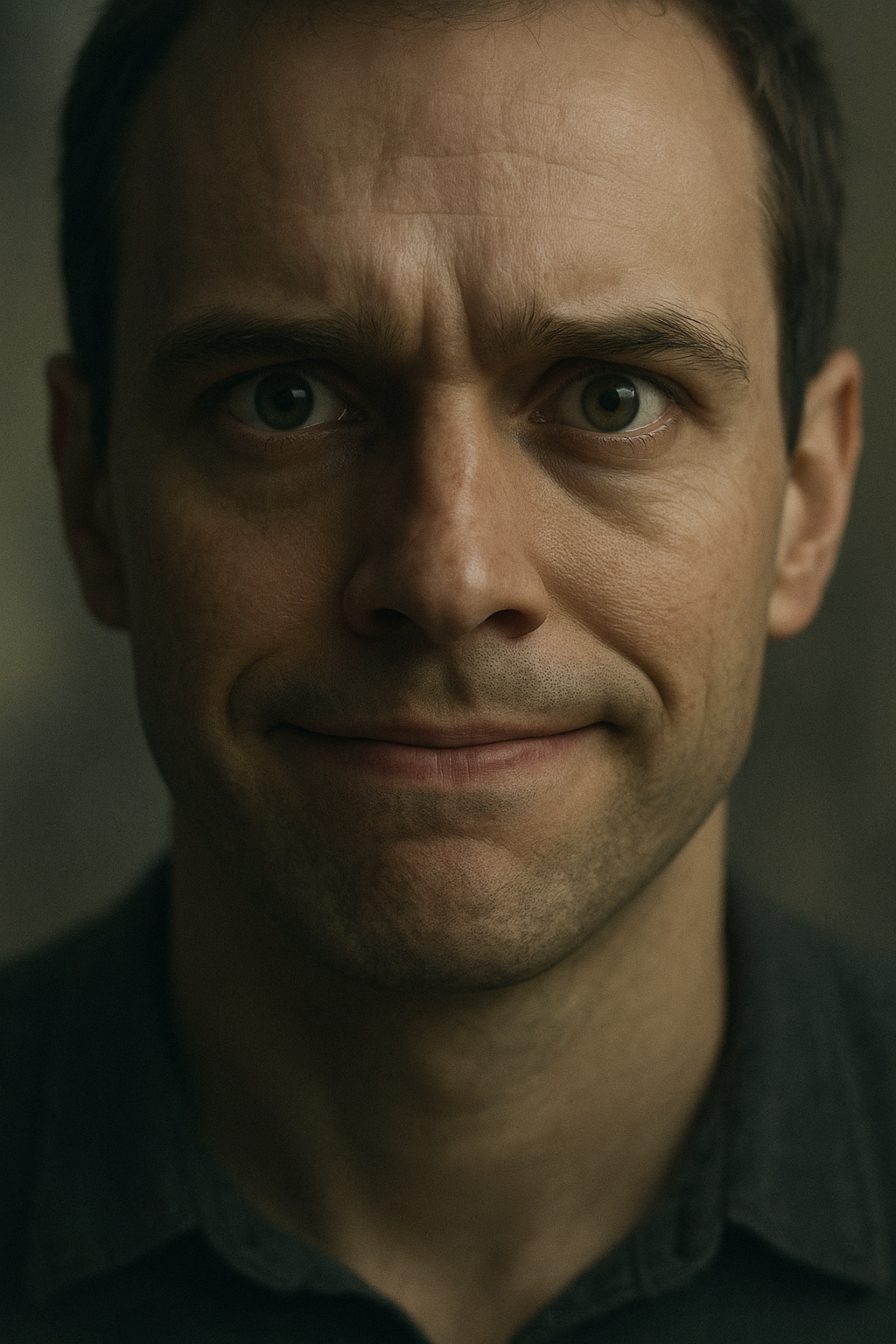
There is something quietly unsettling about a smile that doesn't quite reach the eyes. We’ve all seen itthe smile that feels polite but hollow, like a mask stretched over something less willing beneath. It’s familiar because it happens not just on strangers, but sometimes in our own reflections. That faint sense of something “off” is not a trick of perception. It’s a subtle dissonance that our brains detect long before our conscious minds put it into words.
The Anatomy of an Honest Smile
A genuine smile is more than just lips curving upward. It begins deep in the muscles surrounding the eyes, those small crinkles called crow’s feet that light up when we truly feel something. Psychologists refer to this engagement around the eyes as the Duchenne marker, named after the 19th-century French neurologist who studied facial expressions. But this is not just scienceit’s the silent language of authenticity.
When a real smile blooms, it is a story told in the face. The eyes soften and brighten. The lips find a natural curve, but it’s the eye muscles that confirm the smile’s story as truthful. This combination invites others to feel what you feel, to trust the emotion behind the gesture. It creates a moment of connection, brief yet genuine.
The Disconnect of a Fake Smile
Contrast this with a fake smile, where the lips do the heavy lifting but the eyes refuse to follow. It’s almost like watching someone wear a mask they cannot fully embody. The brain immediately senses this mismatch. Muscles around the eyes remain still, the energy behind the smile is absent. Something is being hidden or forced.
This mismatch creates a subtle tension. It’s difficult to ignore because faces are the most important medium we have for social communication. When we smile genuinely, it signals openness, warmth, and often vulnerability. A fake smile signals something elsesometimes politeness, sometimes discomfort, sometimes guardedness.
Our brains, wired for survival and social navigation, pick up on this tension without effort. This is why forced smiles often feel wrong or uneasy. They suggest a story with missing pages, leaving us instinctively searching for what’s unsaid beneath the surface.
The Unspoken Truth Beneath the Smile
When we carefully observe the everyday moments in which smilesreal or fakeappear, we begin to notice how profoundly faces reveal our inner lives. Smiles become masks because we sometimes need to protect ourselves or navigate uncomfortable social situations. But these masks rarely deceive for long.
This is not about judging others but about recognizing a shared human experience. We all, at moments, pretend, hide, and perform emotions we don’t fully feel. Yet, those small micro-movements and the lack of eye engagement betray us quietly. The face is honest in ways words aren’t.
The discomfort we feel around fake smiles is often discomfort with this emotional dissonancethe invisible gap between what someone feels and what they express. It reflects a tension inside all of us, caught somewhere between vulnerability and the need for social grace.
Why Understanding This Matters
Recognizing why fake smiles feel off is about more than spotting a social “tell.” It’s an invitation to consider the human condition beneath our expressions. It calls us to empathy rather than suspicion, to curiosity instead of judgment.
When we notice the small tells of sincerity or pretense, we remember that everyone carries their own emotional landscape, often complicated and conflicted. In a world quick to demand smiles on commandespecially smiles that aren’t always genuineunderstanding the subtle truth behind a smile can deepen our compassion both for others and ourselves.
Smiles are not just social currency but emotional mirrors. When we look closely, they remind us of our shared need for authenticity, the quiet hope that someone might see us as we are, beyond the performances.
Closing Reflection
There is something profoundly human in the gap between a real smile and a fake one. It is a fracture line where honesty meets the social masks we sometimes wear. That uneasy feeling when a smile feels “off” is a silent signal from our deepest social instincts, quietly urging us to notice what lies beneath.
Next time you find yourself faking a smile, pause and listen to the quiet story your face is telling. It might reveal more than words ever couldabout your own hidden truths, and the unspoken stories we all carry.
This is not a call to perfect sincerity but a gentle reminder that even in our smiles, the human heart finds ways to speak its quiet truth.
This article is intended for reflection and entertainment purposes only.