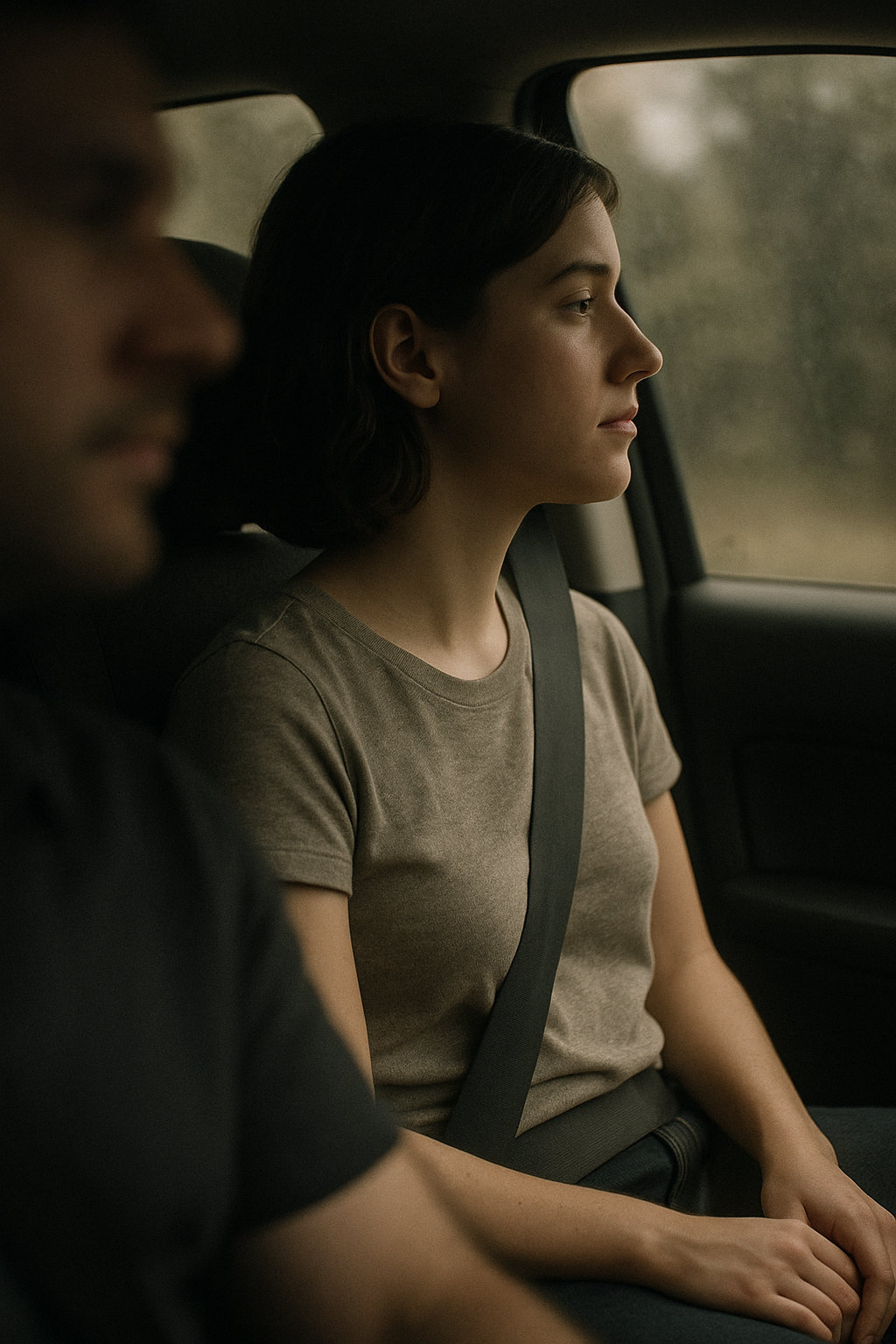
There’s something quietly intimate about sitting side by side in a car, moving through the world without ever needing to meet each other’s gaze. It’s a space where words come easier, where secrets unfurl softly, and where the usual guardso often held high in face-to-face conversationrelaxes without fanfare.
The Quiet Permission of Shared Space
In a car, two people are together but not confronting each other. This subtle shift changes everything. The absence of direct eye contact means we are no longer requesting or offering full attention in the way social interactions often demand. That distant, shared view out the windshield or the side window provides a buffer. It’s an unspoken invitation to ease into our thoughts without the usual pressure to perform, respond, or manage how we are seen.
Humans are wired to be watched. Evolutionarily, looking into someone’s eyes is a powerful social signaltrust, dominance, vulnerability, all broadcast through gaze. But it can also feel exposing and intense. Avoiding that gaze can be an unconscious way to speak truth without feeling scrutinized. When the eyes aren’t pinned, defenses drop because the risk feels smaller. In this environment, confession doesn’t feel like a spotlightit feels like a gentle echo.
Biology of Connection Without Confrontation
The physiology behind this calm acceptance is subtle but real. Eye contact increases the release of certain hormones and neural responses that trigger alertness, sometimes even anxiety. When those signals ease up, the nervous system settles a bit more, making space for vulnerability. When sharing a confined space like a car, side by side, there’s a kind of embodied reassurancephysical proximity without the intensity of direct confrontation.
This arrangement mimics natural situations in human evolution where early humans might have shared quiet moments in close proximitynot facing each other but together against the outside world. It’s a form of social bonding that prioritizes safety and emotional regulation over immediate response.
The Unseen Weight of Being Fully Seen
The eyes are often called the windows to the soul, but sometimes, we choose not to open those windows all the way. Being fully seen means offering every part of ourselves to another’s judgment or understanding. That’s a heavy act, one that demands courage and trust beyond words.
Car rides become a temporary sanctuary where that demand is lifted. Speaking without looking doesn’t mean hidingit’s a different mode of interaction that acknowledges the human need for privacy even in closeness. It’s speaking from the shadow of the other’s presence, not their full light.
Movement, Focus, and the Flow of Conversation
The constant, gentle movement of a car and the steady hum of the engine create a rhythmic backdrop that can soothe restless minds. This kinesthetic calm encourages openness. Our brains often find comfort in rhythm and repetition, which can lower barriers to sharing.
At the same time, attention in the car is divided. One person drives, eyes on the road, the other observes the passing scenery or their own wandering thoughts. This shared but unlinked focus means the conversation doesn’t demand nonstop engagementit unfolds in quiet spaces between glances at the road or street signs. These moments of pause and redirection allow emotions and thoughts to surface naturally, without the urgency of face-to-face dialogue.
The Introvert’s Sanctuary
For introverts and quiet observers, conversations that require intense eye contact or sustained social energy can feel exhausting and overexposing. The car ride becomes a refugea place to share without performance. The physical orientation doesn’t force emotional exposure, and the atmosphere encourages honesty without theatrical display.
Opening up in this context isn’t about simply needing to talk; it’s about feeling safe enough to let the words float, untethered from the usual social checks and balances. It’s a rare kind of freedom, where trust grows not from looking deeply into someone’s eyes but from simply traveling together.
Reflections on Trust and Human Connection
There’s a profound paradox in how we connect: sometimes, it’s in surrendering the full stare, in sharing silence more than spectacle, where we reveal our most human selves. The act of confessing without being pinned down by gaze speaks to the layered nature of trust: not just believing someone will keep your words safe, but sensing that you don’t have to perform for them in order to be heard.
In the dance of human connection, the car is an unlikely stage. It holds our secrets lightly, carries our confessions gently, and reminds us that being seen isn’t always about eye contactit’s about feeling present enough to speak, and present enough to listen, without the weight of being fully displayed.
This article is intended for educational, reflection, and entertainment purposes only and is not medical advice.