
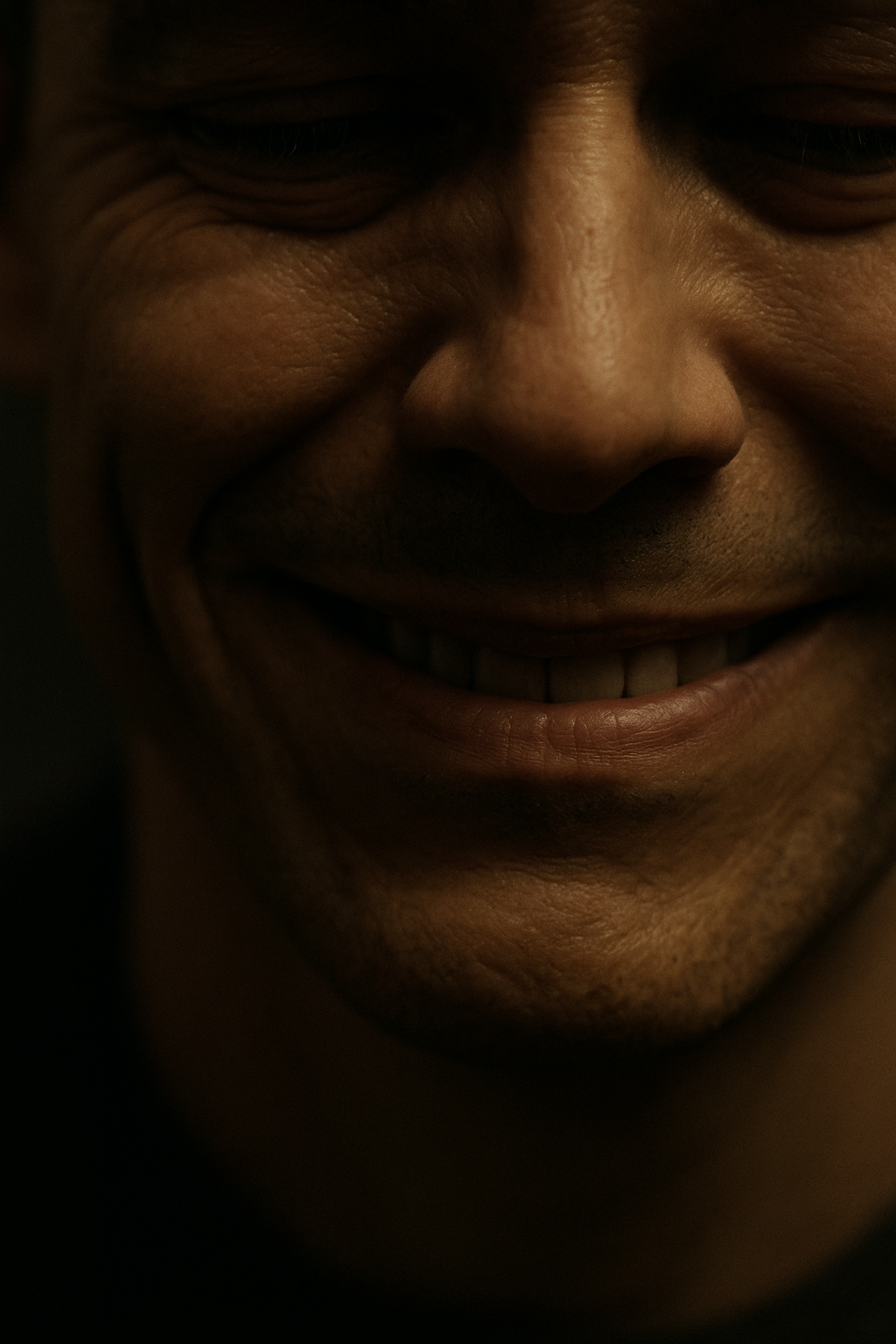
There’s a moment when a smile stops feeling like a smile. A twitch of hesitation in the muscles. A brief disconnect that your mind might miss, but your body never does. That uneasy flicker, subtle as a shadow in a sunlit room, is why fake smiles unsettle us.
The Language Without Words
Before we learned to speak with words, our faces spoke first. Every expression, every microshift in muscle tension told stories. They were the original languageraw, unfiltered, and immediate. When someone smiles, it’s never just the lips curving up. It’s the eyes crinkling, cheeks lifting, and something deeper moving beneath the skin.
Fake smiles disturb that natural rhythm. They mimic the lines but miss the soul. The muscles don’t fully commit. The nerves send faint signals that something is off. It’s almost imperceptible, yet it echoes clearly in the cavities of our nervous system.
Our brains are wired to read these signals because our survival once depended on it. In a world where alliances were fragile and threats close, detecting dishonesty was a skill as necessary as breathing. That flicker of doubt the body registers isn’t paranoia it’s a biological whisper rooted in millions of years of evolution.
Biology Beneath the Surface
Smiling feels simple, but it involves a complex dance of muscles and nerves. The genuine smilethe one that reaches the eyesactivates muscles around the eyes and mouth in a way that is difficult to fake. This subtle activation sends signals not just to the observer but back to the smiler, creating a feedback loop of emotion and recognition.
When a smile is forced, this loop falters. The muscles hesitate or strain unnaturally. The brain notices this mismatch, even if the conscious mind does not fully grasp it. Our bodies read the authenticity of an expression using cues as old as humanity itself.
This is why sometimes a smile can feel cold or hollow, even when it is presented warmly. It’s the body’s ancient radar picking up on the discord between surface expression and hidden truth.
The Gut Knows First
How often have you caught yourself mistrusting a smile before hearing a word? That uneasy gut feeling comes from complex interactions between the brain and the nervous systemespecially the parts involved in instinct and emotion.
Before the rational mind sorts through details, your body sends signals through the vagus nerve and other pathways. These messages influence your heart rate, your breathing, your skin temperature. All of it shifts subtly when something feels false.
This visceral response is why fake smiles are not just socially awkward; they can make us feel unsettled or even unsafe. It’s as if the body senses a disruption in the flow of honesty, and the mind follows its lead.
Beyond Deception: The Weight of Performance
Fake smiles often show up in moments where we feel pressured to perform or conceal discomfort. Think of a crowded gathering where exhaustion hides behind polite facades, or a difficult conversation masked by social niceties.
The body resists this kind of emotional simulation. Maintaining an expression that does not match internal feelings costs energy. Muscles tense without relaxation, and nerves remain alert. Over time, these small discrepancies leave an imprint on posture, voice, and even overall wellbeing.
This tension is part of why genuine connection feels so precious. In rare moments of sincere smiles, vulnerability and strength intertwine. A true smile reminds us that beneath the surface, there is honesty waiting to be seen and felt.
The Quiet Wisdom of Faces
Our faces are more than reflections or masks. They are living records of our experiences, emotions, and even our survival. When a smile falters, it is a crack in the narrative that cannot be easily hidden.
Recognizing this is not about suspicion or judgment. It is about embracing the layers of human expression with a mindful presence. When we notice a fake smile, we are invited to lean in a little further, to listen between the lines, and to honor the complexity beneath.
Sometimes the most profound truths are found not in what is said, but in the fleeting moments when our biology tells a story our words cannot.
Our bodies are storytellers. They speak in muscle, in nerve, and in breath long before our minds find the language to translate it. A fake smile disturbs this story, not loudly but with a quiet ripple that reaches something deep inside. It reminds us that connection is rooted in authenticity, and beneath the surface, we are always sensing, always feeling, always trying to read the truth.
This article is intended for educational, reflection, and entertainment purposes only and is not medical advice.