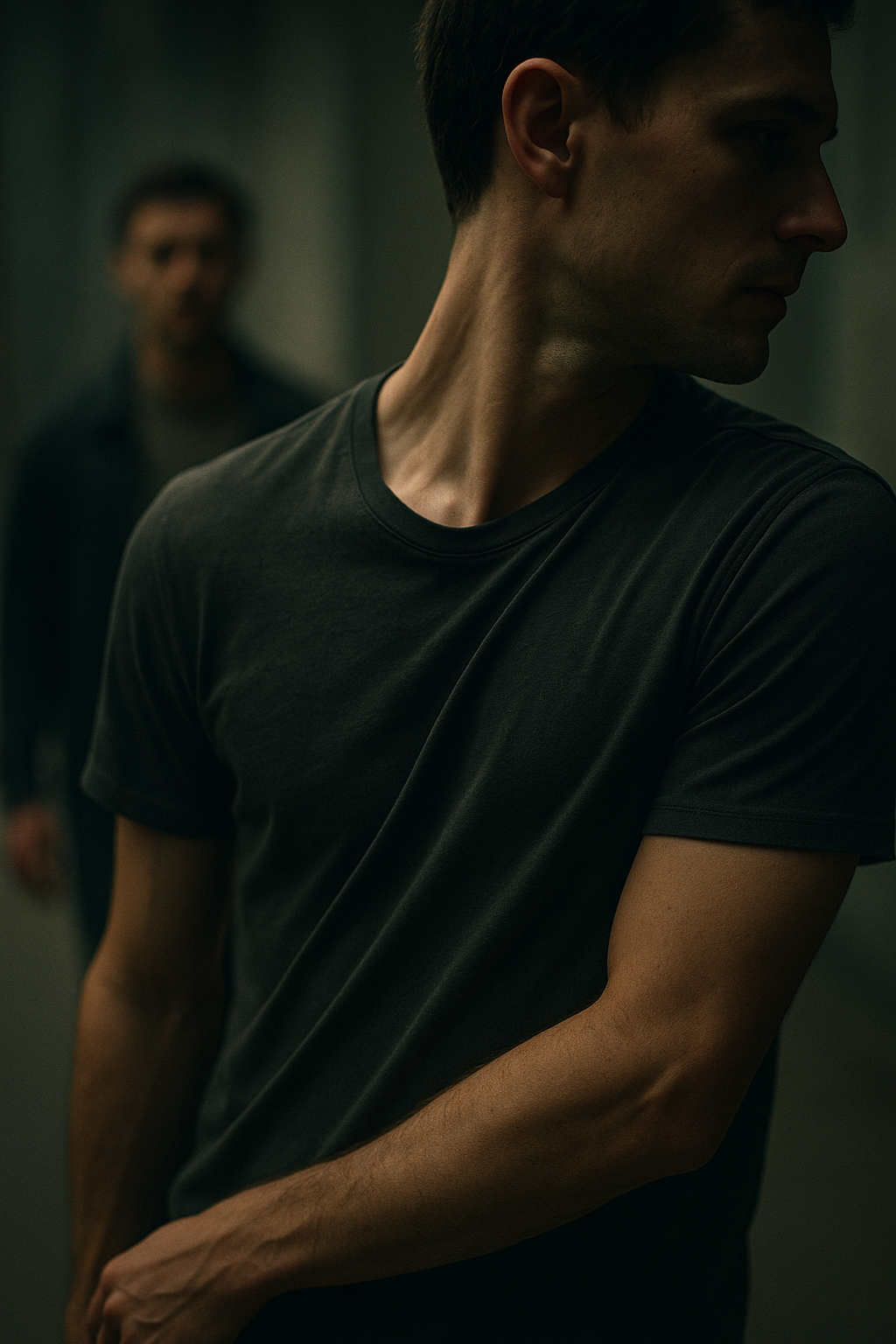
There is something almost cinematic in the way a person subtly shifts their stance, turning not a whole body away, but just slightly angling itenough to create a space, an invisible line in the air. This small movement often goes unnoticed, yet it speaks volumes without a single word. It is a quiet negotiation of space, respect, and emotional safety. Why do we do this, and what does it say about who we are beneath the surface?
The Silent Geography of Our Bodies
When we think about boundaries, we usually imagine talking, setting rules, or saying no. But the body has its own language, one shaped long before words existed. Angling the body feels like fencing off a small territorya way to protect an inner world without confrontation.
This angle is rarely conscious. It’s a bodily instinct, a subtle curve of spine, shoulders, or feet that quietly signals “this is my space,” without needing to raise a voice. In a crowded room or a tense moment, it is our body’s way of drawing a line that doesn’t invite debate. We don’t turn our backs completely; instead, we slice a wedge of distance, inviting others to respect a boundary that feels necessary, even if we can’t fully articulate it.
Roots in Survival and Evolution
Our bodies evolved in a world where survival depended on reading others before they became threats. That turn, that slight body angle, is less about rejection and more about alertnessa way to maintain awareness while signaling cautious distance. It lets us remain partially open, still seeing what’s coming, while opening less than usual to potential harm or unwanted intrusion.
From a physiological perspective, this positioning keeps muscles ready, not relaxed but not fully defensive either. It’s a kind of poised readiness, an ancient posture carved into our muscle memory. The subtle tension in the torso, the feet planted just so, all frame the body like a shield. This is not a grand gesture but a primal calculation played out in real timea dance between connection and protection.
More Than Space: The Psychology of Angling
Though deeply biological, the act of angling isn’t just about physical space. It also maps onto emotional boundaries. When someone angles away, they are preserving their sense of self in a crowded social world. It is less the words spoken and more the message carried in limbs and posture: “This moment is mine.”
In many ways, these tiny shifts in body language shape how we navigate relationships without confrontation. They are a form of self-respect that doesn’t rely on verbal explanation. By creating a wedge of space, we protect vulnerable edges of ourselves where words might fail or be too costly.
What makes this especially compelling is how universal this behavior isappearances differ, ages and cultures vary, but the body’s geometry of boundary-making remains consistent. It reflects the deep human need to balance belonging with autonomy.
Perception, Respect, and Unseen Signals
There is an artistry in noticing these angles when they appear around us. We are sensitive to body language even when we aren’t fully aware. A slight shift can change the emotional atmosphere of a room, a conversation, or a relationship. Sometimes it is playfully coy; other times, it is a firm but quiet pause on interaction.
The bodies that angle tell us a story about how human beings experience respecthow it can be requested or withdrawn not through words but through the shapes we hold in space. Respect here is not a demand shouted into the wind but a shape carved with care and instinct.
Aging, Movement, and Boundaries
With age, this subtle body language may become even more pronounced or change shape. The ways we protect ourselves evolve alongside our bodies’ changing capabilities and rhythms. The muscle memory of boundary-setting remains but may blend with new sensationstightness, fragility, or the careful placement of limbs for comfort as much as defense.
Angling is thus a dynamic conversation between biology and lived experience. It asks us to pay attention not just to what is said but to the quiet, embodied boundaries that arise from years of knowing who we are and what we need to keep ourselves intact.
Closing Reflection
The next time you notice someone slightly turned away, it is worth pausing to consider what that angle means. It is an unspoken story of protection, respect, and autonomy shaped in muscle and bone. It reminds us that boundaries are not mere abstractions but lived experiences grounded in the body’s ancient wisdom.
We are creatures of instinct and emotion, balance and survival, always navigating the space between connection and self-preservation. That quiet angle is one of the most human things we doan act of survival, intimate and unspoken, shaping how we live within the invisible geometry of respect.
This article is intended for educational, reflection, and entertainment purposes only and is not medical advice.