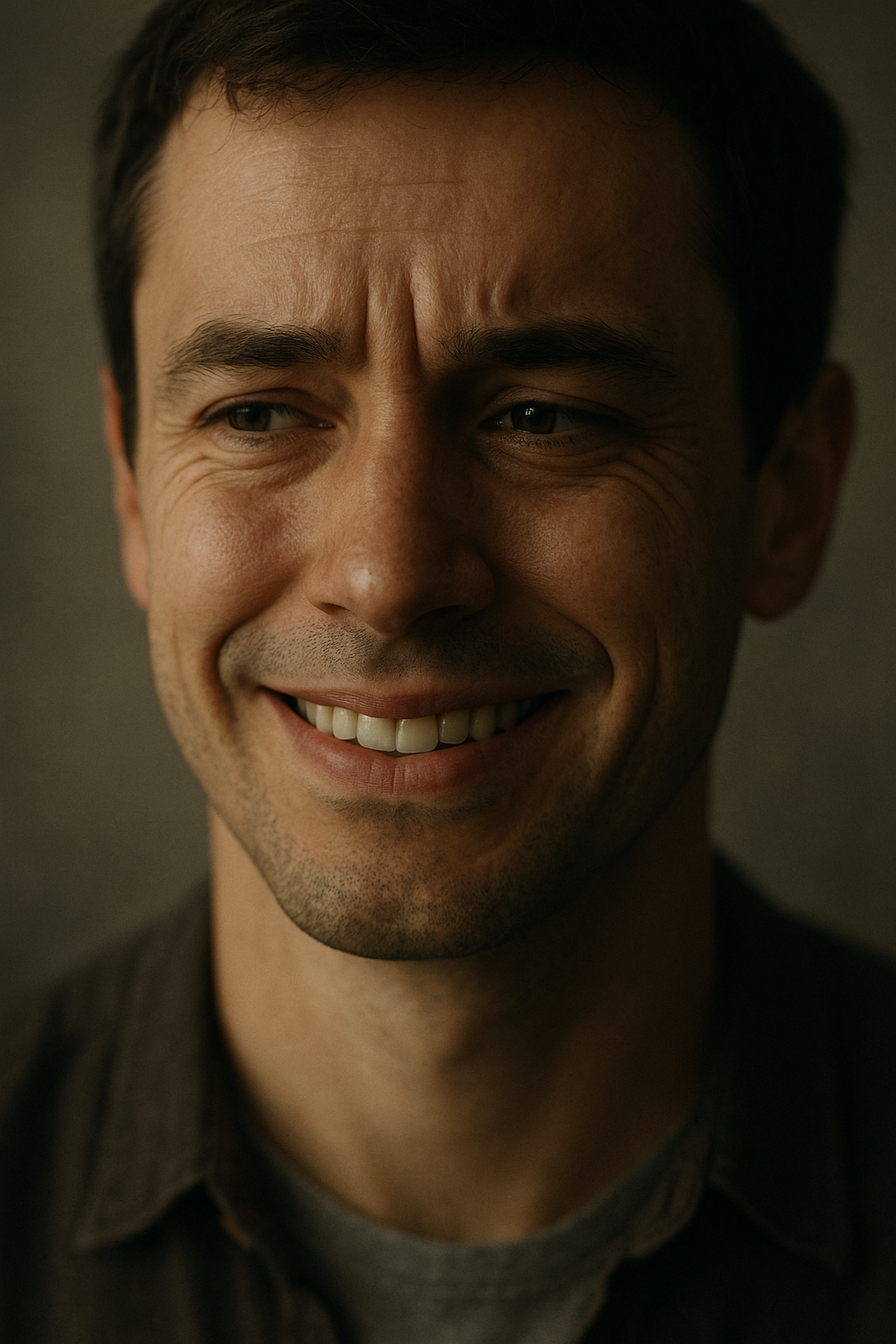
There is something quietly unsettling about a smile that feels slightly off. It’s that instinctive tug at the back of your mindthe subtle suspicion that what you’re seeing is not quite the whole truth. We all know this feeling, even if we cannot immediately put it into words. A smile, after all, is not just about the curve of lips; it is a delicate choreography of muscles and emotions. When forced or false, that dance falters. And the eyesthose deeply human windowsbetray it every time.
The Limits of a Smile
Smiles are often our first form of social currency. They smooth conversations, ease tension, and extend invitations to connection. But smiles can be cheapened when they are performed rather than felt. When we fake a smile, the muscles around the mouth can do most of the work. Lips can stretch and teeth can flash, but these movements are learned and easy to mimic.
The eyes, on the other hand, are less pliable in this performance. Genuine smiles engage the orbicularis oculi muscles that surround the eyes, creating soft creases known as crow’s feet. These subtle contractions can’t easily be turned on like a switch or kept in place without real emotion behind them. The tension there feels differentfaint but telling.
Our eyes are more sensitive messengers than most of us realize. They communicate not just joy, but a spectrum of feelings we attempt to mask. That tiny hitch of tension tells a story of discomfort, restraint, or even silent resistance. Because no matter how practiced your smile might be, it cannot fully erase the truth quietly held behind your gaze.
The Unseen Language of Mismatch
When a smile does not fully reach the eyes, it sets off a ripple beneath the surface conversation. This discordance is what makes a fake smile feel wrong. Imagine hearing someone say something with a subtle mispronunciationyour brain senses the error even if you do not immediately catch it. Similarly, when the mouth and eyes send conflicting signals, your social radar picks up on the incongruity.
This is the power of what psychologists call microexpressionsfleeting, involuntary facial cues that reveal true emotions beneath social masks. These small movements last only fractions of a second but pass beneath conscious awareness. What lingers, however, is a feelinga sense that something is off, that the smile is a half-truth. And humans, wired for connection, are exquisitely attuned to notice.
This silent communication shapes how we respond to others. Fake smiles can create distance rather than closeness because they signal a lack of complete authenticity. They are like half-closed doors, inviting us to wonder what lies behind, unsure whether to push forward or retreat.
Why Fake Smiles Feel Uneven
The discomfort we experience around false smiles is not just about logic or conscious judgment. It has roots deeper in our experience of trust and safety. At some level, our brains expect emotional synchronythe alignment of expression and feelingas a foundation for genuine relationship.
When this expectation is broken, no matter how polite or charming the behavior, it triggers an intuitive warning. This is why fake smiles can feel tiring or even unsettling to both the person offering them and the onlooker. The effort involved in maintaining a façade creates internal tension, a kind of emotional noise that ripples into body language and voice.
For the person receiving the smile, that tension is sensed through subtle cues: the absence of warmth in the eyes, a slight tightness around the eyelids, a fleeting distraction. These nuances are almost impossible to fake convincingly because they originate from primal emotional centers less reachable by conscious control.
This subtle unevenness subtly undermines social trust. It is the difference between a smile that invites and one that deflects, between presence and pretense. And it reminds us that our faces, complex and deeply wired, are rarely capable of total deception.
The Reflective Power of a True Smile
At its heart, the fake smile is a mirror. It reflects not only our social strategies but also the emotional spaces we inhabit. Sometimes we hide behind smiles because we feel vulnerable or unsafe. Other times, we offer them as a shield against discomfort or conflict. Recognizing the signs of a fake smile can deepen our empathyboth for ourselves and for others.
There is grace in acknowledging that no one smiles perfectly all the time. Our emotional worlds are complex, layered, and sometimes fragile. Genuine connection arises not from flawless expression, but from a willingness to be seeneven in moments of awkwardness or disguise.
Next time you catch a smile that doesn’t quite reach the eyes, consider the story behind it. What emotions are being held back? What fears or hopes are quietly waiting beneath the surface? In these moments, there is an invitationto look beyond the mask and to honor the humanity beneath.
Closing Reflection
Our faces are powerful storytellers. They carry imprints of emotion, memories, and truth in combinations too subtle for the conscious mind to fully grasp. The eyes have a special role in this narrative, guarding a quiet honesty that even the most practiced smile cannot erase.
In a world often demanding performance and politeness, the tension between truth and façade can be a source of loneliness or disconnection. Yet within that tension lies also the possibility of deeper understanding. To read the flickers in someone's gaze is to approach another with attentiveness and carenot to judge but to witness.
Perhaps the greatest gift of noticing the hidden human behind a smile is the reminder that authenticity, however imperfect, is a bridge to real connection. And sometimes, it is the eyes that quietly guide us home.
This article is intended for reflection and entertainment purposes only.