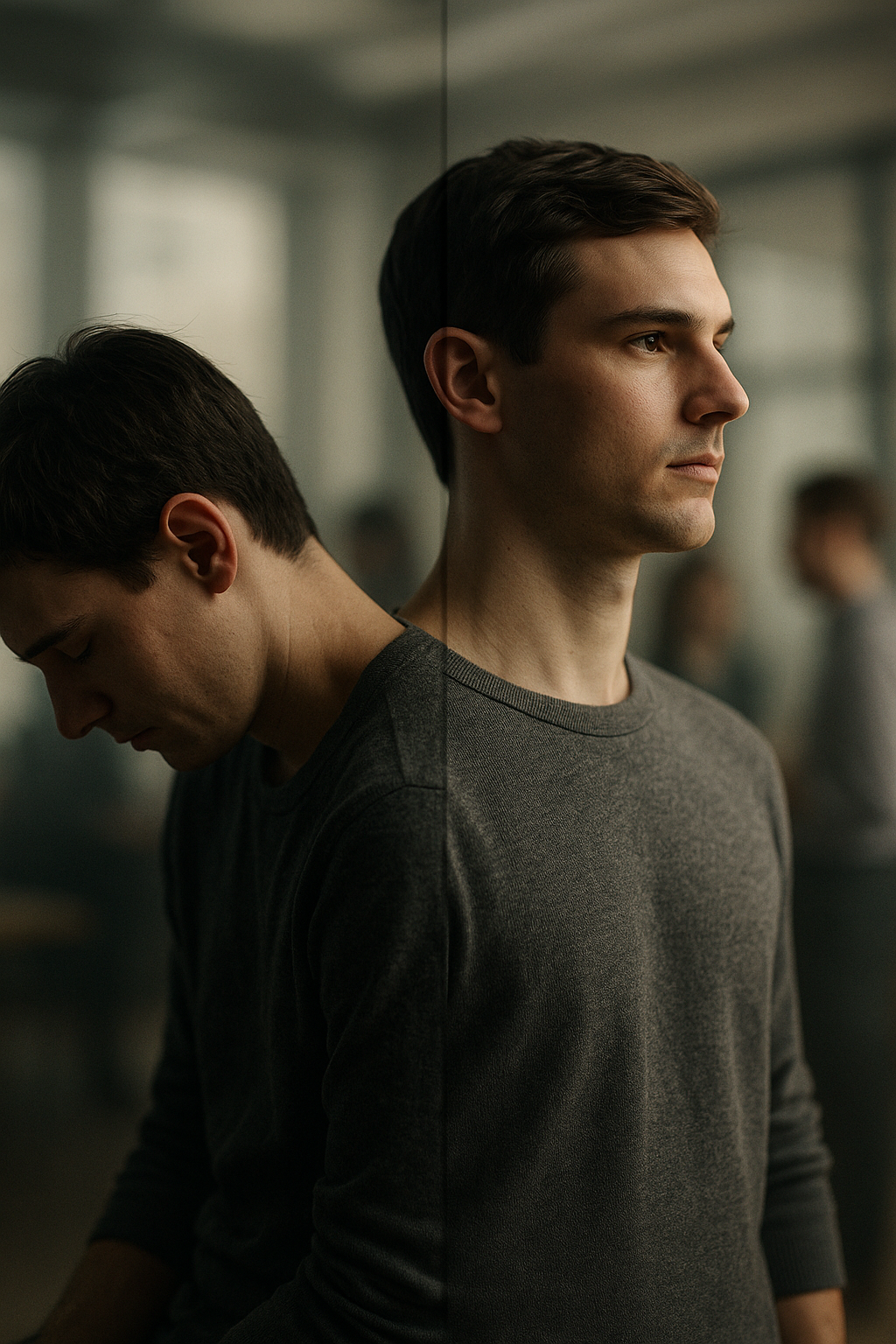
You have been therewithout moving an inch, you suddenly feel smaller. Your shoulders round, your gaze dips, your neck bows just slightly. It’s as if your body shrinks before your mind catches up. That moment holds more weight than you might realize. It rewrites the social scene silently, setting a tone before a single word leaves your lips.
Our bodies speak in a language older than words. How we carry ourselves is a subtle but powerful signal, broadcasting messages to the people around us. Those messages shape their expectations, judgments, and reactions. In the choreography of human connection, posture is an unspoken script that guides what comes next.
The Silent Script of Body Language
When you think about posture, you might picture someone standing tall, chest out, shoulders backthe classic pose of confidence. But this is not a posture prescription or a quick fix. It’s a quiet conversation between you and the world. One that unfolds in shared spaces, shifting the atmosphere without fanfare.
Our brains are wired to respond fast to physical cues. Evolutionarily, posture has been a matter of survivalstrong and open spells safety and approachability, while closed and slumped signals vulnerability or withdrawal. Without realizing it, we read these signals instantly and adjust our behavior accordingly.
What is striking is how quickly others recalibrate their perceptions based on posture alone. You have probably met someone whose physical presence commanded respect or attention before they even spoke. Conversely, you may have noticed how a slump or hesitation in bearing can invite dismissal or disregard. The body sets the emotional tone in the room before conversations begin.
Why Do We Shrink?
We shrink for many reasonsfear, fatigue, self-doubt, or simple habit. Sometimes it is a protection mechanism; a way to say “I am not here to cause trouble.” Other times, it is a learned script handed down through years of subtle social feedback. Maybe early experiences taught you that taking up space was risky or unwelcome.
But here is the profound truth: when we shrink, we do more than protect ourselves. We alter the way the world interacts with us. The invisible signal we send often invites others to treat us as less important, less visible. That quiet withdrawal can ripple outward like a stone dropped in water, affecting relationships and opportunities in ways we rarely notice.
Standing Upright Without Rigidity
The answer is not about forcing ourselves into a robotic posture. It is not about standing like a statue to impress. True presence is held in a subtle, grounded posturenot stiff, not theatrical, but real. One that declares, without words, “I am here. I am part of this space.”
This posture interrupts patterns of dismissal. It challenges social scripts that tell us to be smaller or quieter. When you stand upright, you shift not only how others see you but how you feel about yourself.
The most human posture is one of openness mixed with easea natural breadth of the chest, relaxed shoulders, and a neck that carries the head gently, not forcing it. It is a posture that embodies connection instead of defense, invitation instead of retreat.
The Emotional Landscape Behind Posture
Posture does more than influence how others treat usit subtly shifts our own emotional state. The mind and body exist in constant dialogue. When we change our physical position, we initiate a feedback loop that alters our mood, confidence, and social readiness.
This interplay happens quietly but profoundly. Standing upright can remind you of your own resilience. It can carve out a space in your mind for self-recognition. The act of opening your body is a small but powerful gesture of self-compassion. It says to yourself that you deserve presence and respect.
However, the reverse is equally true. When we habitually close off our bodies, we may inadvertently reinforce feelings of insecurity or low self-worth. It is a cycle easy to get caught inbody shapes emotion, emotion shapes body. Awareness is the first step to breaking free.
Presence Before Words
Before any conversation, posture writes the prologue. It shapes the narrative of our interactions and anchors our social identity. When you claim space, others sense a kind of permission to meet you fully.
Consider how meeting someone who carries themselves with quiet dignity suddenly changes the energy of the interaction. That unspoken claim colors everything that follows. The weight of presence is felt deeplyeven if just under the surface.
The most transformative reality here is that this claim is not about arrogance or dominance. It is about honoring your own human worth, in the simplest and most elemental way possibleby the way you hold your body.
Closing Reflection
Posture is one of those overlooked dimensions of our human experience. It is rarely discussed with the depth it deserves, yet it shapes so much of how we live and connect. The way you carry yourself is a form of storytellinga narrative told in glimpses and gestures that invites or resists engagement.
By cultivating awareness of your posture, you begin to gently rewrite the social scripts that have held you back. You tell the world, and more importantly yourself, that you belong here. That your presence matters.
This is not about perfection or performance. It’s about a quiet assertion of existencea humble but profound human truth. And in that truth, you find a thread of connection, patiently waiting to be claimed.
This is the hidden language of the human body. The language of presence.
This article is intended for reflection and entertainment purposes only.