
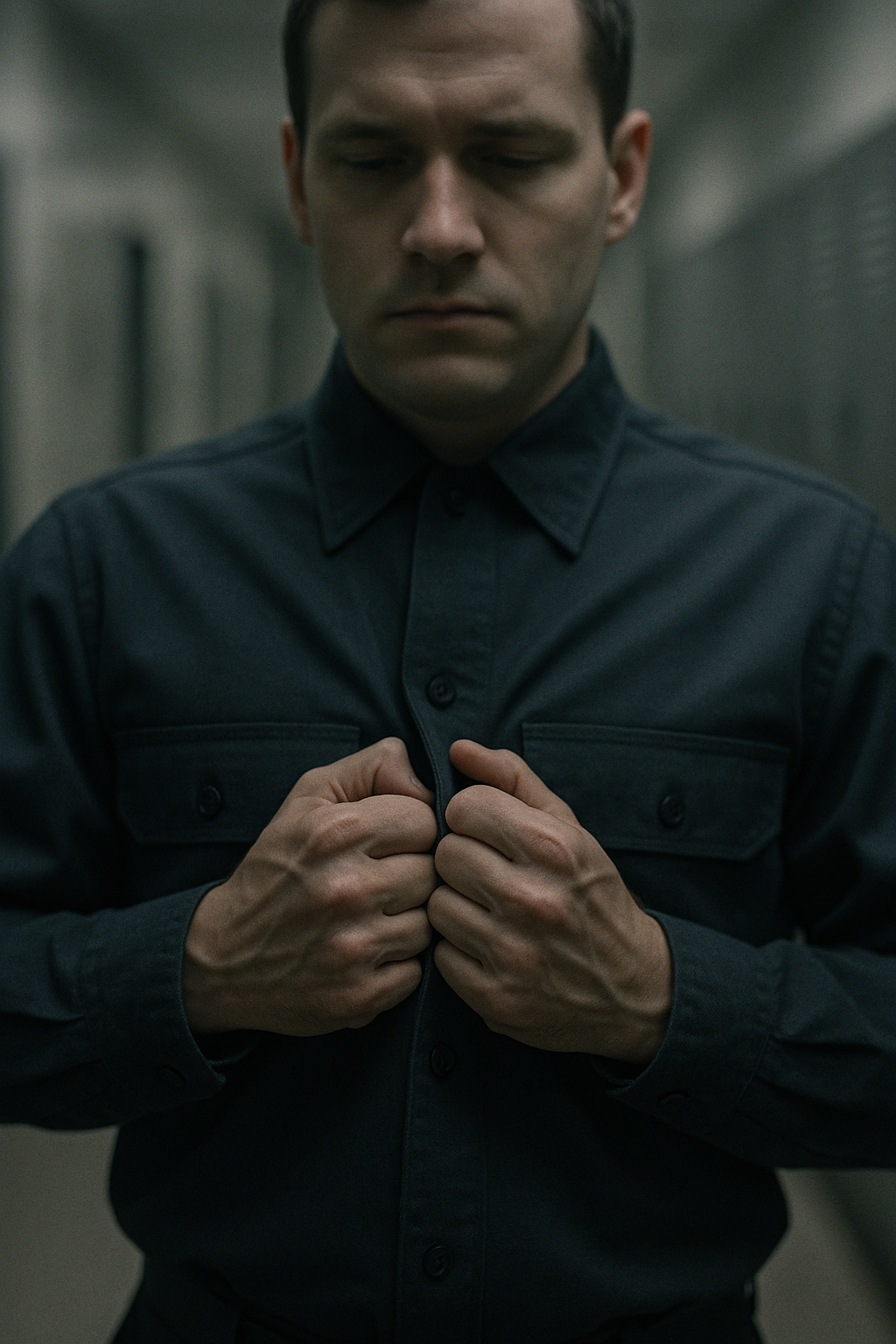
There’s a certain quiet power in the way a uniform settles on your body. At first, it’s just fabric. A symbol, a necessity, a code of belonging. But almost imperceptibly, something shifts beneath the surface. The uniform does more than dress you. It rewires how you think, how you move, how you see yourself.
The Invisible Architecture of Identity
We tend to think of clothing as something accidental, a cover for who we already are. But uniforms offer a unique inversion of that assumption. They do not merely reflect identitythey scaffold it. Wearing a uniform is an act of becoming. A moment when the individual self softens, yielding to a role that demands more than just compliance. It demands transformation.
The brain is exquisitely sensitive to cues from our environment, and a uniform is a concentrated dose of meaning. Every stitch signals a code, a set of expectations, a script that begins to rewrite our internal narrative. The mirror doesn’t just show new colors or lines, it reveals a new self emerginga self shaped by guidelines not entirely our own.
Beyond Conformity: The Role We Step Into
It would be easy to dismiss uniforms as tools of conformity, designed to erase uniqueness and enforce sameness. But beneath that surface lies something more complex, and perhaps more human. We are storytelling creatures, and a uniform hands us a new character to inhabit. The simple act of pulling on a specific outfit invites our mind to narrate a different internal story.
You are no longer just you. You become a nurse, a soldier, a student, or an officer. And with this newly cast role comes an unspoken script that begins to unfold inside your mind. How should someone who wears this uniform think? How should they hold themselves, speak, respond to the world? These questions stir internal responses, often below the level of conscious thought.
This transformation is subtle. You don’t feel it happen because it unfolds like a shadow inside you. Yet the change is real and measurable. Research in social psychology shows how uniforms can increase compliance, shape attitudes, and even alter behavior in ways that align closer with group norms and expectations. The uniform acts like a psychological framework, helping the wearer to internalize the role rather than just perform it on the outside.
Threads That Bind: Identity as Something Fluid
One of the most profound effects of wearing a uniform is how it calls attention to the fluidity of identity itself. We often hold to the idea that who we are is fixed, a constant beneath the surface of our outward appearance. But the reality reveals itself as more layered.
Identity is porous, malleable. It responds to cues, environments, and social roles in ways that are both adaptive and revealing. The uniform exemplifies this truth. Each thread, each badge, becomes a tether pulling identity in a particular direction. Some part of us resistsit’s impossible not tobut some part also yields because role-taking is a fundamental human capacity.
Stretching into a new identity is not always comfortable. Sometimes it feels like a gentle invitation; sometimes like a silent pressure. The uniform reminds us that beneath the stories we tell ourselves about who we are lies a deeper structure of social belonging and psychological adaptation. Our sense of self can bend, stretch, and transform, often quietly, beneath the surface of conscious decision.
The Mindset Shift You Don’t Notice
Most striking is how quickly this transformation takes hold. It doesn’t require a long act of will or elaborate intentions. Just wearing the uniform initiates a mental shift. This subtle rewiring tells the brain, without words, that it’s time to inhabit a new space, adopt new ways of thinking and behaving.
We see this effect in many contexts, from the uniforms of professionals to the clothes of athletes. When the uniform goes on, the routines of the role begin to take command. You find yourself thinking differentlyeven if just a bitacting with the assumptions and goals baked into the outfit.
This silent transformation reveals something intimate about the human experience. We are perpetually shaped by the worlds we enter, often before we become fully aware. In a way, wearing a uniform is a reminder that identity is always a living story, authored not only by our individual desires but by the subtle forces of context and expectation.
Reflection: What Does Wearing a Uniform Ask of Us?
The quiet power of uniforms invites us to consider what parts of ourselves are constant and which are open to change. It asks where the boundaries between self and role blur and why we so often welcomeif sometimes unconsciouslythe opportunity to step into something larger than our individual selves.
Perhaps the transformation uniforms encourage is a survival mechanism, a way to align with collective needs while balancing personal identity. Perhaps it’s a mirror reflecting the tension between belonging and individuality. But whatever the answer, the lesson remains: who we are in our everyday lives is not just worn on our sleeves; it is woven into the very fibers of what we choose to wear.
The uniform reveals that beneath the surface, our identities are less rigid than we imagine. They are living, breathing, shifting in response to the worlds we inhabit. The next time you see someone put on a uniform, or experience it yourself, remember you are witnessing not just clothingbut a subtle act of becoming.
This article is intended for reflection and entertainment purposes only.