
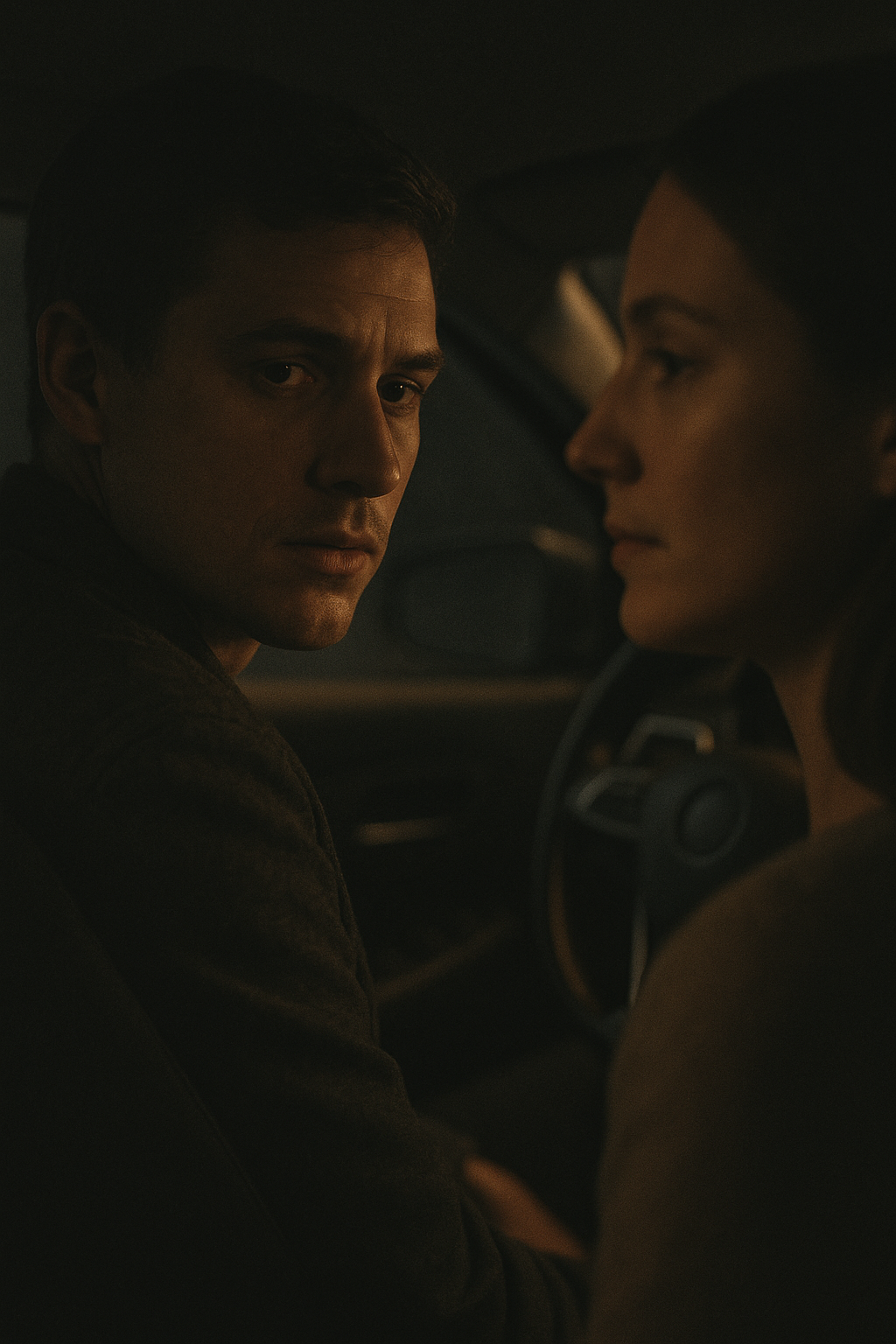
There is a quiet magic to being side by side with someone in a car. It’s a setting that seems ordinary every day, even mundane. But within its compact frame, the subtle architecture of human connection shifts. Conversations that might never surface in the openness across from one another somehow find their way here, drifting out like whispered notes carried gently by the hum of the engine.
Why is it that some of our deepest truths don’t feel as fragile or exposed when we sit next to someone rather than opposite them?
The Angled Gaze and the Gentle Unfolding of Trust
When we talk face to face, there is an immediate and often relentless intensity in the exchange of glances. Eye contact demands a level of honesty and vulnerability that can feel almost like standing in the spotlight an invisible pressure to perform or protect, to hold back or forge ahead.
In contrast, sitting side by side offers a quiet reprieve from this dynamic. Your eyes do not lock; they don’t challenge or demand. Instead, they move in parallel or look just slightly away, creating an unspoken permission to be less guarded. This subtle angle changes everything. It’s like two people viewing the same scene from adjacent seats on a bench, rather than standing across an interrogation table.
This arrangement lowers the stakes. The vulnerability inherent in confessions feels less like exposure and more like sharing a secret on safe ground. The car cabin becomes a small, enclosed world where words slip out with less fear of judgment or interruption. Here, trust unfolds not in a blaze of confrontation but in gentle sidesteps and glances exchanged in the periphery.
Confessions That Tiptoe In Disguised as Everyday Talk
Inside the tangible intimacy of a car, confessions rarely arrive announced with fanfare. They do not crash through the door demanding attention. Instead, they open the door quietly, carrying the guise of ordinary conversation.
A pause between sentences. A hesitation disguised as a moment to focus on the road. A casual mention that feels like an aside but carries the weight of something more. Because you are side by side, the risk of being startled or feeling caught off guard diminishes. The usual power dynamics of conversation where one might feel vulnerable or exposed soften here.
This softer terrain invites a kind of storytelling that breathes. Vulnerability becomes strategic, almost self-protective. It tiptoes forward shyly rather than barging in, as if testing the waters. There is a sense that revealing the truth sideways allows it to take root and grow without immediate threat. The essential balance in the relationship is preserved, even as something fragile and personal emerges.
The Confined Space as a Container for Emotional Safety
There is also something to be said about the physical space itself. The car is small and contained, a private world cocooned against the noise and unpredictability of the outside.
This proximity can amplify feelings of safety. You are enclosed together, sharing a bubble where distractions fall away and attention narrows. The familiar presence beside you offers reassurance, a quiet solidarity.
Curiously, this intimacy does not suffocate. It invites a certain kind of openness precisely because it is so grounded. Unlike a neutral or formal space that might heighten anxiety, the car’s cozy confines make it easier to lower the defenses.
In this way, the environment cradles the conversation in a form almost cinematic in its realism. It’s not theatrical or grandiose; it’s just two humans, side by side, navigating the winding paths of honesty as the world moves around them.
Why Sideways Secrets Feel Less Like Confessions
There is a paradoxical freedom in speaking truth without the demand for immediate eye contact. Side by side, the speaker can share while glancing elsewhere at the window, the road, or even a dashboard reflection. This minimizes the feeling of being scrutinized.
The absence of direct gaze reduces the emotional charge often tied to confession. It allows the vulnerable parts of us to surface gently and almost incidentally. Without the pressure of locked eyes, the speaker’s guard is lowered, and the listener can receive truth without becoming overwhelmed.
The car’s alignment supports this flow. The journey becomes a metaphor. Just as the vehicle moves forward steadily along a path, so too can the truth move forward delicately, aligned but not confrontational. It’s a shared trajectory rather than a face-off.
The Quiet Power of Sideways Connection
In a world increasingly dominated by screen-to-screen conversations and fractured attention, the side-by-side space in a car reminds us of the understated power of proximity without direct opposition. It teaches us that connection is not just about what is said or how intensely someone looks, but about the conditions that allow us to relax into truth.
There is profound humanity in this arrangement a recognition that sometimes, the most real conversations happen not in the face of another, but alongside them. It is a dance of trust and risk, subtle and slow, anchored by the simplicity of being together in a moving space.
Perhaps what makes the car such a confessional space is less about what is said and more about how safe it feels to say it. The absence of scrutiny, the closeness without confrontation, the unspoken promise of shared presence these elements create a container where truth slips out without breaking.
Closing Reflection
The car, with its quiet companionship and angled perspectives, reveals something essential about human connection. We are not always ready to face one another head on with our most vulnerable parts. Sometimes, truth needs to be carried sideways, shared gently as we move forward together.
Next time you find yourself side by side with someone in the intimate vessel of a car, listen closely to the quiet unfolding of trust. Notice how words lean into the shared space, how confessions come in soft echoes rather than loud declarations.
In the everyday rhythm of these moments, beneath the flicker of passing streetlights, we glimpse a deeper truth about how we hold one another not by staring straight into each other’s eyes, but by journeying quietly, shoulder to shoulder.
This article is intended for reflection and entertainment purposes only.