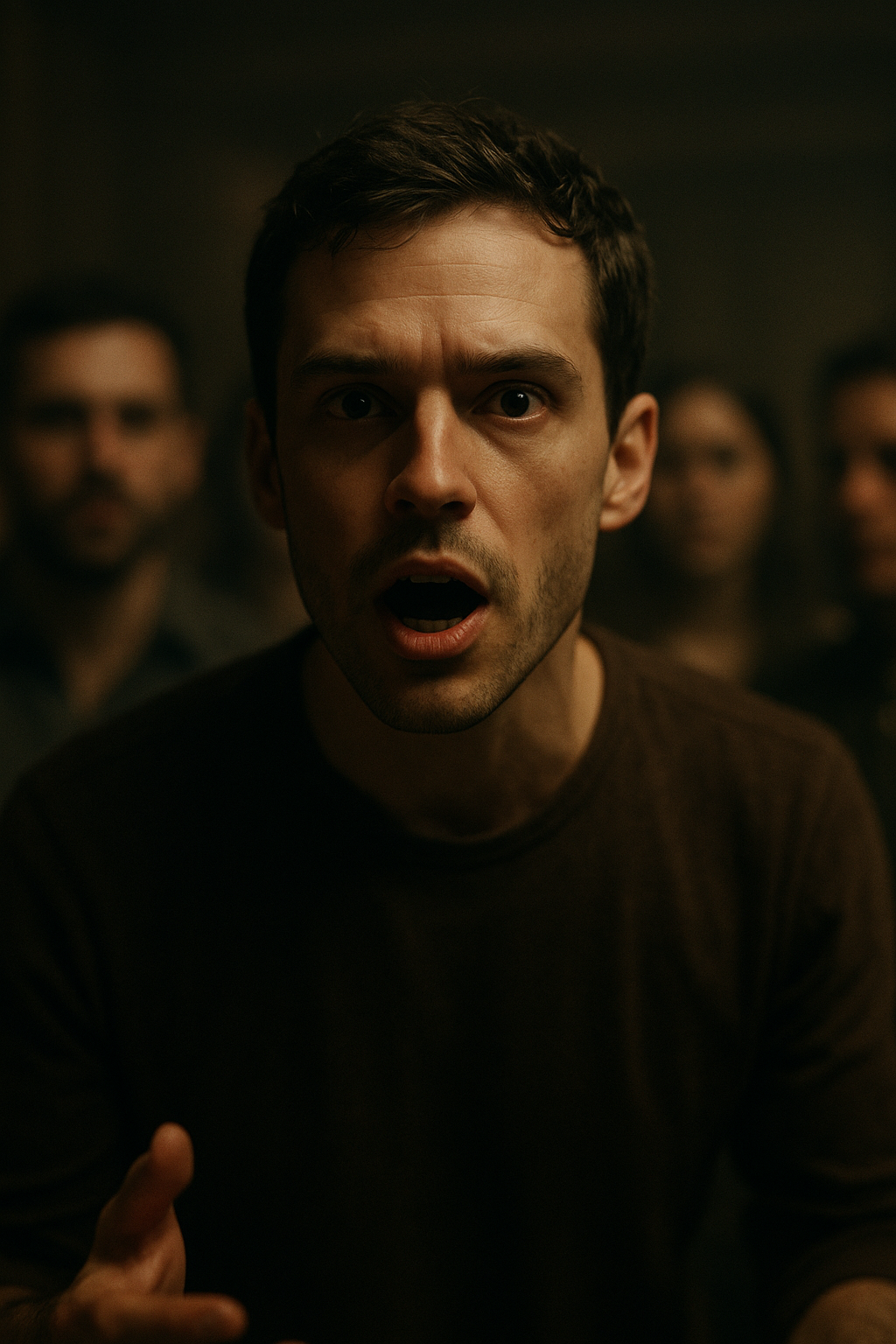
There is a peculiar tension that quietly settles whenever we gather in a group. Somewhere beneath casual laughter and exchanged glances, an invisible competition stirsthe battle for the best story. It is never just about entertainment. The stories we tell are the threads that knit us into the fabric of belonging. Lose your story, and you lose a piece of yourself.
Stories as Social Currency
When we listen, we listen for more than just the story itself. Our brains are wired to scan social landscapes with remarkable precision. Every tale carries a weight beyond its words. It signals status, identity, and the promise of connection. In a noisy room where many vie for attention, the stories that cut through the chatter are the ones rich in detail, urgency, or strangeness. They glow brightly, pulling eyes and ears like a lighthouse piercing fog.
This craving isn’t vanity, even if it looks like showmanship. For tens of thousands of years, human survival has depended on belonging. Our ancestors lived within tight-knit groups where social bonds were as vital as food or shelter. Storytelling is a form of participation and proof of membership. It declares, “I am part of this world, and I have experience that matters.” Without that declaration, exclusion from the group was a real threatbiologically and practically.
The Brain’s Narrative Wiring
Somewhere between the memory centers and the emotional core of the brain, stories reside as a kind of living currency. Our neural circuits don’t just record events; they encode meaning through narrative. When we speak or listen, these circuits light up in ways that increase social reward and reinforce group cohesion. The emotional punches delivered by good storiessurprise, humor, suspenseare part of how our brains measure and remember social standing.
The desire to win the “best story” isn’t just about attracting attention. It’s an attempt to claim a position within the group hierarchy. Human beings are acutely sensitive to social ranking because it often correlates with access to resources, support, and protection. The narrative we stake out is, in essence, a badge that signals our place in this delicate social dance.
The Invisible Cost of Losing
What happens when your story fails to hold the room? When others interrupt, outshine, or simply ignore the tale you lay down? The sting goes deeper than momentary embarrassment. It triggers an ancient unease associated with social rejectiona threat that taps into the body’s stress responses.
Feeling unheard can flood the nervous system with subtle stress hormones, making the chest tighten, the hand tremble, or the voice falter. These aren't just psychological reactions; they are the body’s echo of a very real biological alarm. What’s more, when this pattern repeats, it can chip away at our sense of self. We start to doubt whether our experiences matter. We shrink away from the social stage, silencing the very stories that would keep us connected.
The Evolution of Human Connection Through Story
Looking at this through the lens of evolution, storytelling is a remarkable adaptation. It is more than a tool for passing time; it is a means of knitting together knowledge, culture, and identity. Early humans who mastered the art of narrative were not only entertaining but also teaching, warning, and building trust. The stories they told became repositories of collective wisdom and emotional glue.
Even today, narrating our lives in compelling ways helps us make sense of the world and our place within it. The narratives we choose to share shape how others perceive usand ultimately how they accept us.
Stories and the Body’s Rhythm
There is also a physicality to storytelling that often goes unnoticed. The rise and fall of vocal pitch, the gestures that punctuate a suspenseful moment, the rhythmic breathing that matches an intense scene. These are the subtle, embodied cues that make a story come alive. Our bodies participate in telling these stories as much as our words do, anchoring them in the shared space between speaker and listener.
This dynamic exchange triggers a cascade of responses in everyone present, synchronizing emotional states and attention. It is a kind of unspoken agreement, a shared journey that momentarily dissolves isolation. Winning this unspoken contest for attention is, in part, a mastery over this embodied communication.
The Quiet Power of Listening
In the shadows of this battle for stories lies an equally profound act: listening. To truly hold space for another’s narrative is to affirm their place in the room without contest. It is often the most overlooked part of storytellinghow we receive and respond carries its own weight.
Listening well can transform social dynamics, turning competition into connection. In moments like these, the urgency to win fades, and something deeper emergesthe recognition that every story is a thread in the ever-growing tapestry of human experience.
Closing Reflection
We all know the ache of being overlooked, the subtle grief of having no one lean in when we speak. And yet, the drive to be heard, to offer our best story, is never about vanity or ego alone. It is, at its heart, a survival instinctthe ancient and silent cry to belong.
In the quiet spaces between our words, there is a fragile dance of identity and inclusion. The stories we tell are more than tales; they are the echo of generations seeking place and meaning. To battle for the best story is to fight for a home within the human tribe.
This is why, in every room, when voices rise and calm, when eyes catch and drift away, we hold tight to our stories. Because in losing the story, we risk losing the self.
This article is intended for educational, reflection, and entertainment purposes only and is not medical advice.