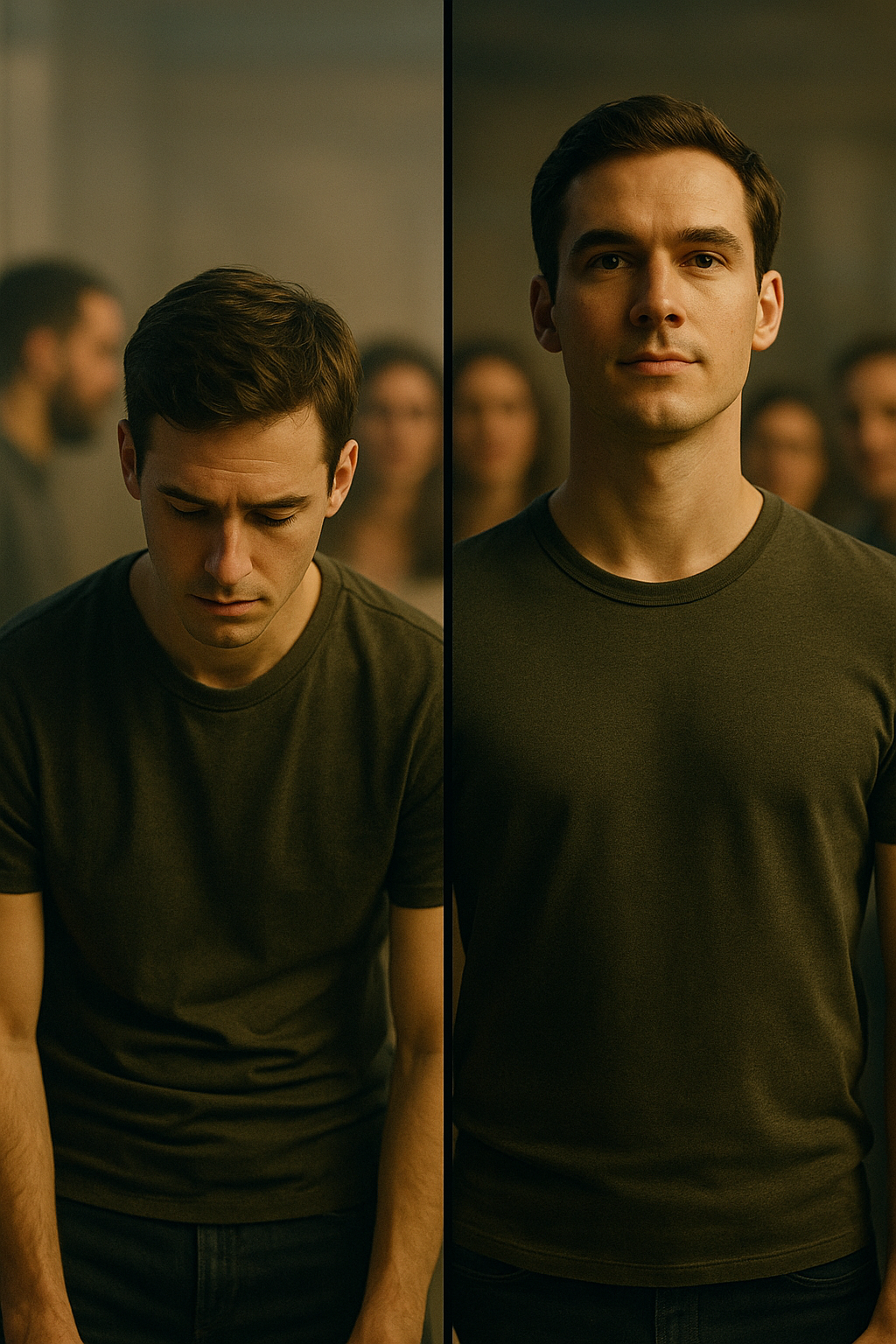
You might not realize it, but the way you hold your body writes a story long before you speak a single word. Posture is a silent language, one that others read instinctively. It molds how they see you, how they treat you, and quietly rearranges your place in a room. There’s a hidden power in standing tallan invisible frame that holds more than just your bones.
The Subtle Signal of Posture
Posture is often dismissed as just a matter of comfort or health. But it also acts as a blueprint for social perception. When you slouch or shrink away, it sends a message not just to yourself but to those around you. It whispers uncertainty, hesitancy, and a readiness to fade into the background.
Humans are wired to pick up on these cues. From the first moments of infancy, we gauge confidence and status through how others carry themselves. Slouching can be interpreted as a body doubling down on doubt. It becomes easy to overlook someone who doesn’t fully occupy their space. It’s not that slouching makes a person less worthy, but it leaves a gap for others to unconsciously fill with less attentive responses.
In contrast, standing or sitting tall creates a very different dynamic. It’s not about puffing up or trying to seem bigger than you are. It’s about taking ownership of the space you inhabit. When you align your body upright, you signal presence and a readiness to engage. The air shifts. People lean forward, listen more carefully, and treat you as someone who matters.
Biology Behind the Invisible Script
Why does posture influence others so deeply? Part of it ties back to ancient survival instincts rooted in biology. Our brains are attuned to read body language because it’s a vital way to detect friend, foe, or ally from subtle cues. Upright posture may have evolved to signal power and capacity without aggression, a way of demonstrating value within a group.
Physiologically, posture affects how your nervous system operates. When your spine is aligned and your chest open, breathing deepens. This extra air floods your brain with oxygen and brings a quiet steadiness to your heartbeat. Your nervous system settles out of fight-or-flight mode and attunes to calm alertness. This state, in turn, influences your voice, eye contact, and facial expressions. They become more engaging, more inviting.
The mind doesn’t simply react to posture; it works with the body in a loop. How you carry yourself shapes how you feel, which shapes how others respond, which then echoes back, reinforcing the posture you hold. It’s a conversation without words, a dance between physiology and social perception.
Posture as a Form of Self-Respect
There’s a deeper emotional truth to postureit’s a gesture of self-respect. When you stand tall, you’re making a statement to yourself that you deserve full attention. This kind of presence isn’t loud or aggressive. It’s quiet confidence. An invitation to be taken seriously without demanding it.
For those who are quietly ambitious, this matters a lot. Your goals may not be broadcasted with fanfare, but how you carry yourself can open doors or close them before you say a word. People who move through life with a reserved strength often find that an aligned posture amplifies their inner voice in ways that words cannot.
But posture is not about perfection or rigid formality. It’s about becoming someone who is harder to ignoresomeone who leans into their own worth and invites the world to do the same. It’s a practice, subtle and ongoing, as natural as the way your body moves or your breath flows.
The Aging Body and Posture’s Quiet Influence
As we age, posture takes on additional layers of meaning and challenge. The natural compression of the spine, changes in muscle tone, and the weight of time often draw us inward physically. We round forward, shrinking just as the world sometimes seems to expect us to withdraw.
But maintaining uprightness through those changes isn’t merely about appearance. It preserves dignity and agencya way to say, despite the passage of years, that you remain present, engaged, and worth attending to. Posture becomes a line between fading away and stepping into the fullness of your presence.
There is a quiet resilience in this that resonates deeply with human nature: we may grow older, but the way we carry ourselves still shapes the value the world assigns to us.
Presence Echoes Beyond Words
Posture is an old language that neither technology nor trends have erased. It remains one of the most primal and effective ways we communicate who we are before a word escapes. It can tell a story of confidence, hesitation, strength, or retreat.
For those who move softly through life with quiet ambition, understanding this invisible power grants a kind of agency. Adjusting how you hold yourself doesn’t mean changing who you are. It means revealing your value more fully and reclaiming the space you deserve.
Human presence is a fragile, exquisite balance. Posture is the frame that holds the picturesometimes unnoticed, rarely accidental, always telling a deeper truth.
This article is intended for educational, reflection, and entertainment purposes only and is not medical advice.