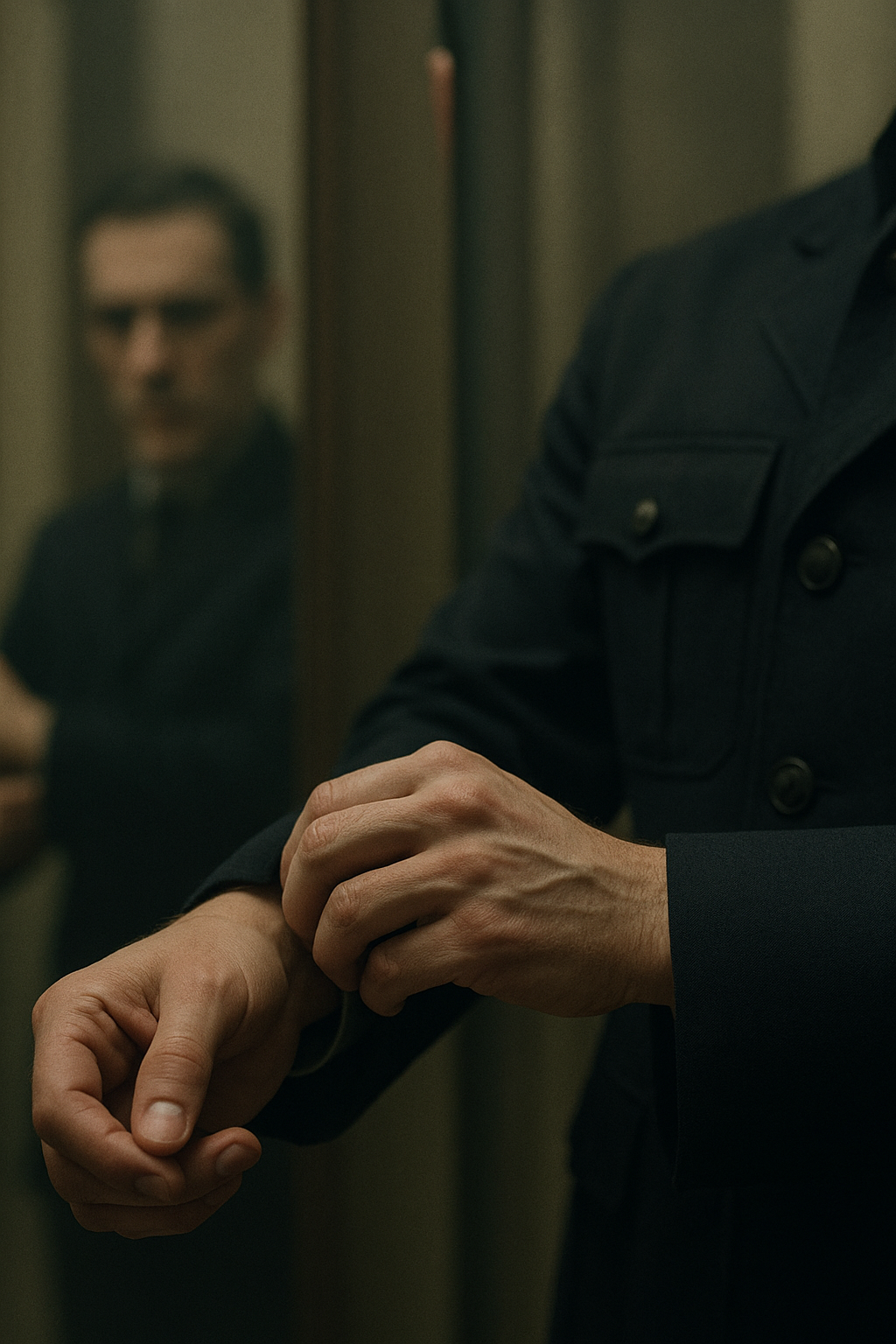
There is a moment when you change clothes, when you step into a uniform, and something shifts. It is subtle, almost invisible, but unmistakable if you pay attention. The textures against your skin are more than fabric. They are a signal, a message sent to your own brain, rewriting who you believe yourself to be. This quiet transformation redraws the lines that separate you from others and reshapes the way you hold your place in the world.
Wearing the Invisible Script
Clothing has always been a language. When you put on certain clothes, you don’t just cover your body you begin to wear an identity composed of social cues, roles, and expectations. Uniforms intensify this effect. They script behavior in a way casual clothes do not. The moment the uniform slides onto your skin, it drapes you in a set of silent rules that your brain quickly learns to follow.
The change is not just psychological in a conscious sense. It is biological. Our brains are expert pattern-recognizers, sensitive to subtle changes in sensory input. The feel of a collar, the weight of a badge, or the stiffness of a fabric can trigger shifts in how we move, how alert we are, and how we relate to the space and people around us. The body remembers these signals even if the mind resists.
The Boundaries That Uniforms Draw
What makes uniforms particularly powerful is the way they redraw invisible boundaries. Boundaries are part of the architecture of human interaction. They help us know where we begin and end, and where others do. Uniforms can change these internal maps.
In a uniform, personal boundaries may feel less flexible. Suddenly, your sense of self becomes entangled with the group identity the uniform represents. Your actions are filtered through an assumed set of limits and responsibilities. You move differently. Your voice carries a different weight. Others perceive you differently as well, reinforcing the new sense of self the uniform encourages.
This subtle reconfiguration is a quiet social contract signed without words. It happens with surprising speed and almost unnoticed shifts. Over time, as the uniform molds behavior, those boundaries can become a cage, a limiting frame that rules your movement and constrains your freedom.
Biology of the Second Skin
Why does this happen? On a primitive level, human bodies and brains evolved to adapt quickly to environmental cues for survival. Clothing and feel of textures are part of this sensory world. When an object consistently touches the skin, the brain integrates it into the body’s representation of itself.
Uniforms add social context to this sensory information. The body holds memory in its muscles and fascia quiet systems that remind you how to stand, hold your head, or carry yourself. Over time, the uniform can recalibrate these memories, aligning how you move with the expectations it implies. This is why many people find themselves slipping into different postures, gestures, or even rhythms of speech while wearing certain clothes.
The brain’s plasticity its ability to adapt and rewire plays a role here without you being fully aware. Each wearing of the uniform is like running a rehearsal for a role in a play. The body and mind learn the lines and choreography, often outside of conscious thought.
Identity Embedded in Habit
The longer a uniform is worn, the more it becomes enmeshed with identity. What began as an external imposition can become internalized. The habit of sliding into a role can narrow the field of how you see yourself and your possibilities. This narrowing isn’t always negative uniforms can grant confidence, solidarity, and a sense of purpose. But it also risks limiting individuality and personal boundary-setting.
When the uniform is discarded, the brain must untangle itself from this embedded habit, a process that can bring disorientation or relief. It is a subtle reminder that identity is fluid and shaped as much by the roles we inhabit as by our own internal sense of self.
The Quiet Power of Clothes
In a culture that prizes self-expression, it can be easy to overlook how deeply clothing shapes our inner experience. Uniforms are a perfect example of this. They reveal how something as simple as fabric on skin can have outsized effects on psychology, behavior, and boundaries.
Understanding this allows for a more conscious engagement with what we wear and what it means. Clothes can become tools for empowerment or enclosures of control. They can create community or isolate identity. The uniform is, in a sense, both armor and cage. To recognize this duality is to reclaim some measure of choice in the roles we play and the boundaries we set.
When you next put on your clothes, consider the silent story they begin to tell about who you are and who you might become.
This article is intended for educational, reflection, and entertainment purposes only and is not medical advice.